
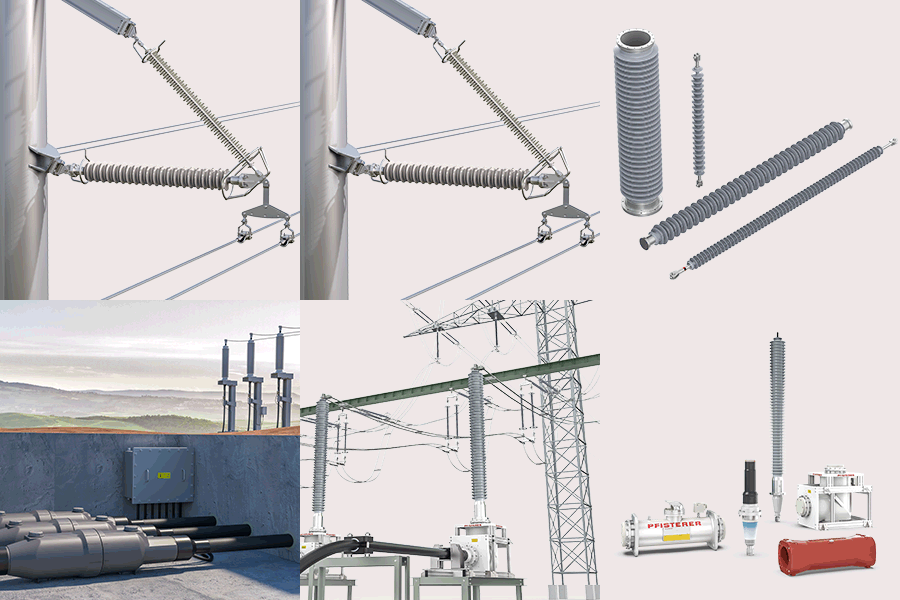
High voltage bushings are key components in AC and DC transmission grids as part of interconnection power transformers and shunt reactors to busbars as well as overhead lines. To provide required insulation to earth and transmission of respective current, they must be specially designed according to applied electric field and to withstand environmental stresses such as pollution and seismic events, among others.
Oil-impregnated paper (OIP) bushings have been applied since the start of electrification and are still widely used as a mature and reliable technology. Still, although OIP bushings fulfil all technical standards and requirements, they can be exposed to risks in service that include loss of insulation media and accelerated ageing of their paper insulation due to overheating. Under harsh service conditions, RIS bushings (RIS) with silicone rubber sheds can be applied instead to increase safety of both transformers and reactors.
This edited contribution to INMR by Alexander Doutrelepont, Bernhard Heil and T. Schnitzler at Trench Group and HSP Hochspannungsgeräte in Germany outlines the relative advantages offered by RIS.


Structure & Design
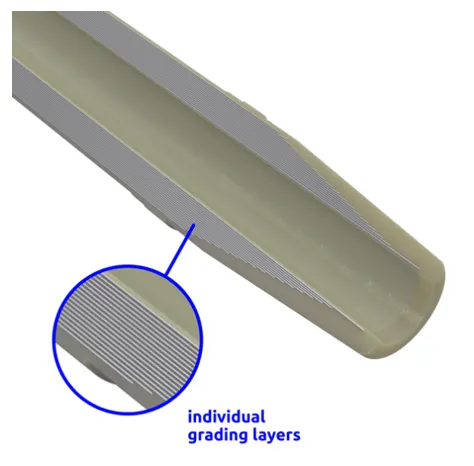
The main component in a high voltage condenser bushing is the so-called active part or condenser core. In the case of RIS types, a synthetic non-woven material is the carrier for the epoxy resin in which concentric aluminum layers of individual capacitors have been precisely placed (see Fig 2). This provides the required capacitance grading.
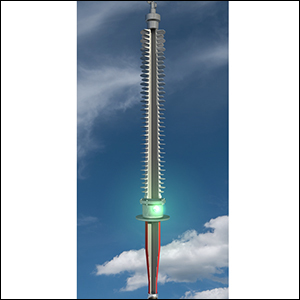
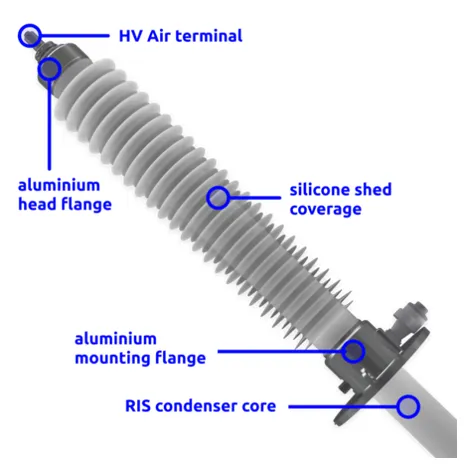
The condenser core is housed within a composite insulator covered by silicone rubber sheds (Fig. 1). The gap between insulator and condenser core is then filled with a dry-type N2-based foam. As such, the bushing is free of hazardous fluids and gases such as mineral oil, SF6, CO2, etc. RIS condenser types are therefore more environmentally friendly than conventional OIP bushings and in many cases also competitive in life cycle cost versus resin-impregnated (RIP) bushings.

Electrical Function & Properties of RIS Cores
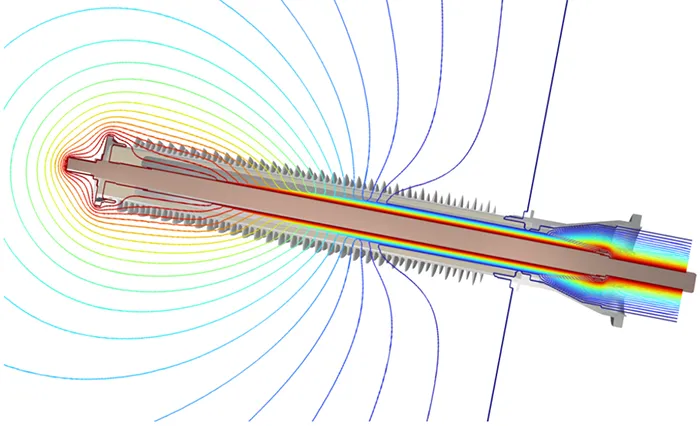
Under application of high voltage, a capacitance graded condenser bushing distributes the electric field uniformly, i.e. local electrical field stress can be reduced and spread over the full length of the bushing (Fig. 3).
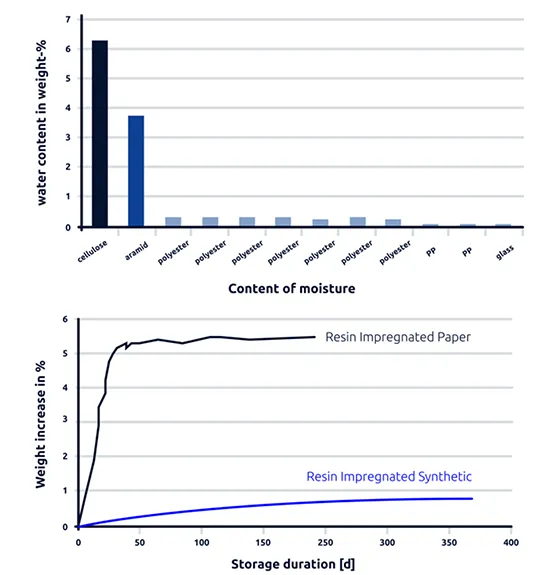
One of the main advantages of an RIS condenser core is its non-hydroscopic performance which ensures no moisture or humidity ingress that might otherwise damage performance under high voltage. Paper, as used in RIP type bushings, can accumulate humidity during exposure to ambient conditions. Controlling this aspect is therefore crucial not only during manufacture but also during installation, commissioning and storage in the field.
Fig. 4, for example, compares humidity absorption of RIS and RIP condenser cores. After storage at 23°C and 50%RH, the result for paper is 6.24% while for synthetic materials it is only 0.23-0.32%.

Qualification of RIS Bushings
Although the only component of an RIS condenser bushing that differs from an RIP type is the synthetic carrier for the epoxy resin and aluminum layers, an extensive qualification program is nonetheless necessary. This is to ensure that all the established benefits of an RIP condenser bushing are maintained and even improved. For example, Fig. 5 depicts a thermal cycle test of RIS bushings with dynamic mechanical loading and continuous electrical load. A set-up inside a climate chamber enabled 30,000 load cycles of 2500 N with ambient temperature that varied between -60°C and +50°C (see Fig. 6). During the test, the bushings were stressed continuously with 80% Up. At each temperature peak, key parameters were measured including capacitance, dissipation factor and partial discharge. The bushings passed without failure.
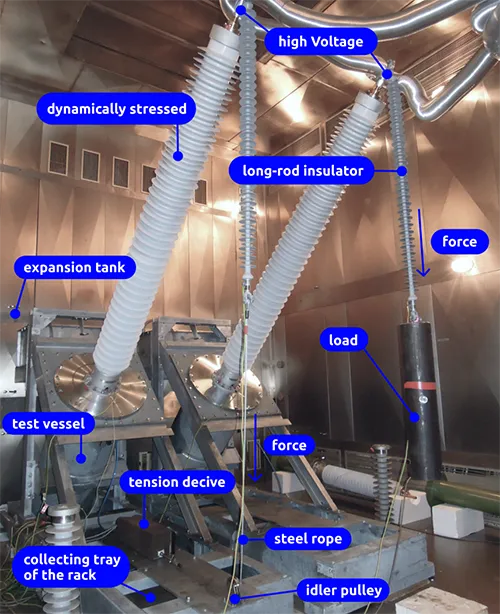
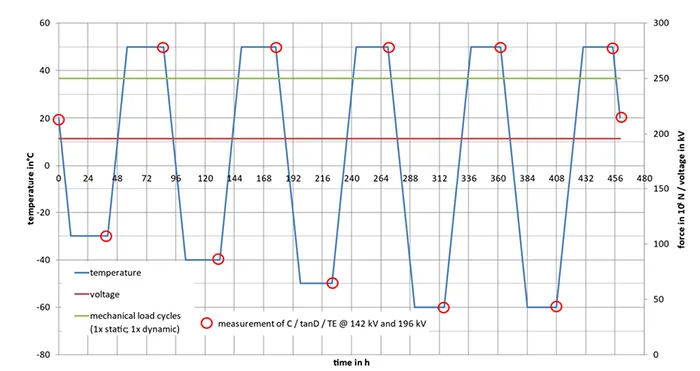
As a result, RIS condenser bushings are confirmed to cover the full range of both, low ambient temperature up to -60°C and seismic requirement such as RIP condenser bushings. Comparative accelerated aging tests of RIP and RIS condenser cores were caried out in the HSP long-term test laboratory and confirmed that the lifetime of RIS condenser bushings exceeds the lifetime of RIP condenser bushings.
Since the first RIS condenser bushings were installed and commissioned in 2014, more than 2000 RIS condenser bushings are in operation to date with more than 50 million accumulated operating hours and a failure rate of 0%.

HVDC Condenser Bushings in RIS Technology
Specific equipment is needed or HVDC grids and inter-connections such as oil-immersed shunt reactors or power converter transformers and condenser bushings are required to connect such equipment. In this type of application, the DC electrical stress leads to resistive grading in addition to the capacitive grading of AC electrical stress. Therefore, design and testing of HVDC condenser bushings is elaborated and defined by specific international standards.
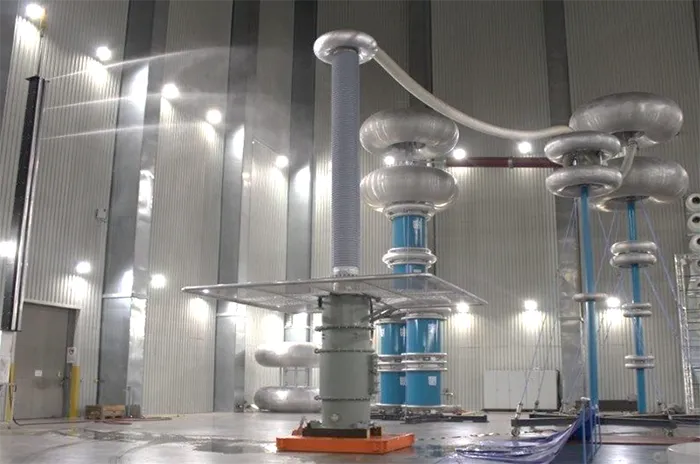
To assess the suitability of RIS technology for these types of HVDC applications, development and extensive testing was performed on a 545 kV HVDC converter transformer bushing. To verify design and testing, individual test sequences were performed in parallel with both RIS and RIP technologies. All applicable type and design tests were successfully completed in 2022. Fig. 7, for example, shows the set-up for the even wetting DC voltage test.
Life Cycle Assessment
Environmental impact and use of eco-friendly components and equipment for more sustainable transmission and distribution have become increasingly important for TSOs and other electricity supply utilities. A validated method to determine CO2 impact of different alternatives is key.
Such assessments calculate carbon footprint for each product category – from initial sourcing to manufacture, delivery, installation, commissioning, operation, removal from service and disposal.
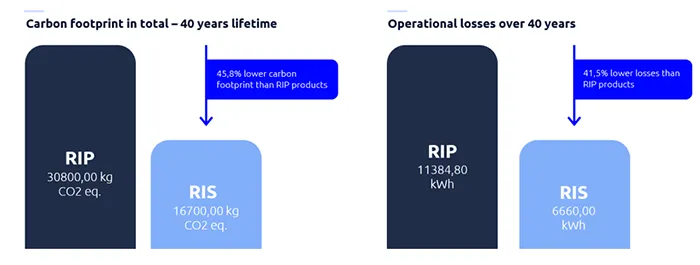
Fig. 8 compares carbon footprint for RIP and RIS condenser bushings under the following base line scenario: total lifetime of 40 years and anticipated temperature based on an average load of 70% as in-service operating conditions. RIS condenser bushings have a 45.8% lower carbon footprint than RIP types. Moreover, operating losses are significantly lower as well.

Ambient Performance of Silicone Insulators
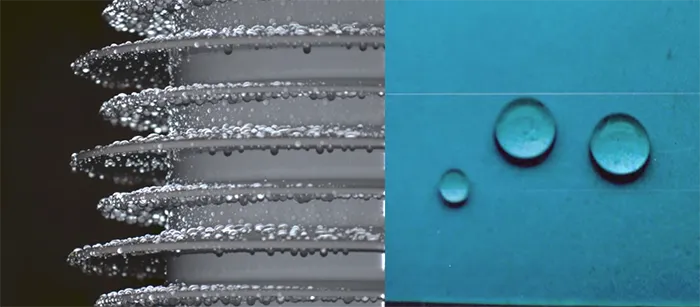
Another important aspect for users is the outdoor performance of alternative types of condenser-graded bushings. Weather events such as heavy wetting and pollution exposure among others can reduce a bushing’s insulation properties. These days, state-of-the art bushing designs are silicone insulated, offering easier handling due to less weight and better outdoor performance.
Due to its intrinsic hydrophobicity, silicone rubber has a water repellent surface that prevents complete wetting. Accumulation of conductive pollution layers is thereby reduced and so is risk of flashovers. Moreover, this hydrophobic effect will also transfer over time to the surface pollution layer. High pressure washing of silicone rubber insulated bushings is not recommended and should be avoided. Most established suppliers offer their own guidelines when it comes to how best to perform cleaning.
Conclusions
RIS types are often the ideal condenser bushing technology for application in AC as well as in DC transmission and distribution grids. This is because utilization of a synthetic non-woven as the carrier material for the epoxy resin is the most advanced from the viewpoint of applying components and manufacturing materials. Compered to OIP or RIP styles, dry RIS condenser bushings offer better service performance as well as key advantages when it comes to installation, commissioning and storage, including:
i) no paper and no insulation fluids such as mineral oil or ester fluids;
ii) reduced ageing due to elimination of organic materials;
iii) higher resistance to ambient humidity -> non-hygroscopic material;
iv) lower dissipation factor compared to RIP types and no PD activity;
v) homogenous material characteristics, i.e. no risk of voids;
vi) lower carbon footprint.

Bibliography
[1] Publication IEC 60137 “Insulated Bushings for alternating voltages above
1 000 V”, 2017
[2] Publication IEEE Standard C57.19.00-2004 “General requirements and test procedures for power apparatus bushings”, 2004
[3] A. Del Rio, N. Lange, M. Mohamad, “Synthetic Dry Bushings for Application in HV Power Transformers & Reactors”, INMR World Congress, October 20th – 23rd 2019, Tuscon, Arizona, USA
[4] Publication IEC/IEEE 65700-19-03 “Standard for Bushings for DC application”, 2014
[5] J. M. Seifert, W. Hubl “Hydrophobicity effect of silicone housed composite insulators and its transfer to pollution layers – Design and environmental parameters influencing the hydrophobic surface behaviour”, Iraklion Symposium, April 26th – 27th 2001, Kreta, Greece