Publications have addressed the presence and impact of biofilm formation on outdoor high voltage insulation, both ceramic and polymeric. However, direct comparison between different polymeric materials under identical conditions has never been performed up to now.
This edited contribution to INMR by Lars Jonsson of Hitachi Energy reports on a recent study comparing impact of biofilm on hydrophobicity recovery of both extrusion grade HTV silicone and liquid silicone rubber (LSR). In total 20 samples were used in the study carried out according to requirements of DIN EN 60068-2-10:2006-03. The surface of all specimens was inoculated with a suspension of different fungi and incubated under optimal conditions. After the test period, hydrophobicity as well as hydrophobicity recovery after cleaning were determined for both types of material.
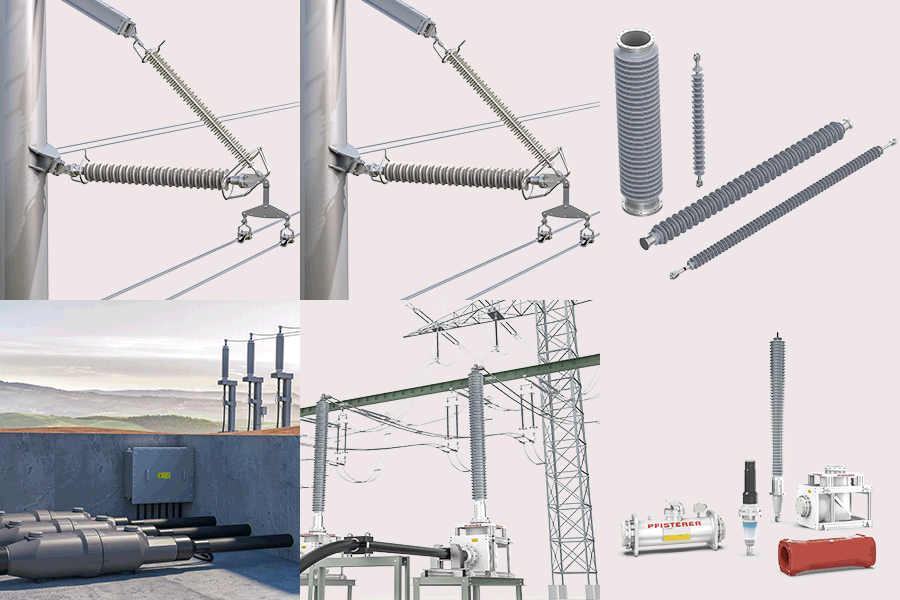


It has long been a concern among asset owners that polymeric materials for outdoor insulation may be more prone to biological growths than ceramic insulation. Even though there are many reported such observations, there are no reported cases of flashover directly due to biological growths. Still, these observations are mostly discussed in relation to composite insulators.
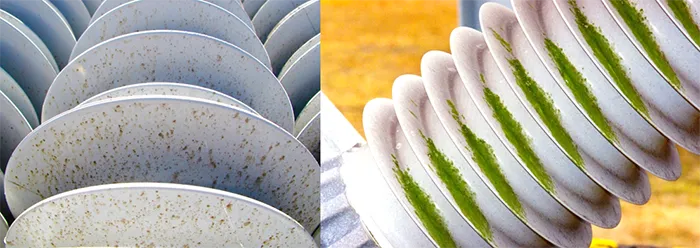
This may be a combination of the fact such growths are more visible on polymers or that such materials are more prone to development of biological growths. Whatever the case, direct comparison between different polymeric materials under identical conditions has not previously been conducted. Up to now, most studies of biological growths on insulators refer to experience from tropical or subtropical environment.
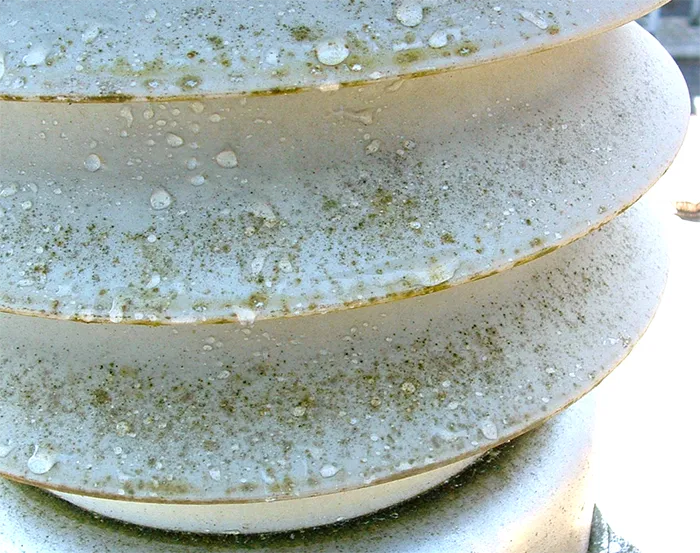
There are several ways microorganisms can influence the structure and function of synthetic polymeric materials used in electrical insulation. The main mechanisms are biofouling (contamination), degradation of leaching components, corrosion, hydration, penetration, and discoloration. The surface does not need to support growths to be affected. The mere presence of a biofilm could potentially interfere with material function.
Results from previous studies have indicated that silicone rubber is highly resistant to corrosion induced by microorganisms. However, it may contain organisms that produce pigments causing discoloration, not removable by cleaning.
Scope of Study
This study aimed to understand the potential effects of biofouling on polymeric and ceramic insulators used as external insulating materials in bushings. Susceptibility of different types of outdoor insulators to biological growths was evaluated by determining surface hydrophobicity class of the materials. The reason for this choice of evaluation method was that the most common effect of biofilm formation on insulators has been reduction in hydrophobicity, which could potentially reduce wet flashover voltage. Consequently, surface hydrophobicity measurement by water contact angle measurement would seem a logical approach.
The polymeric insulators studied included 4 different HTV silicone rubber formulations, one type of LSR and one ceramic material (see Table 1).

Note: All samples taken from new insulators not exposed to any outdoor environment

Experiment
A total of 20 specimens with a surface area of approximately 25 cm2 were cut from each sample. The surface of specimens was cleaned with isopropanol and then rinsed with de-ionized water. After drying, the specimens were placed in a dust-free container and kept under standard laboratory conditions (23°C, 50% RH) for at least 24h before further treatment. Half of the specimens were then exposed to accelerated ageing; the other half were not. Fig. 1 illustrates the approach.
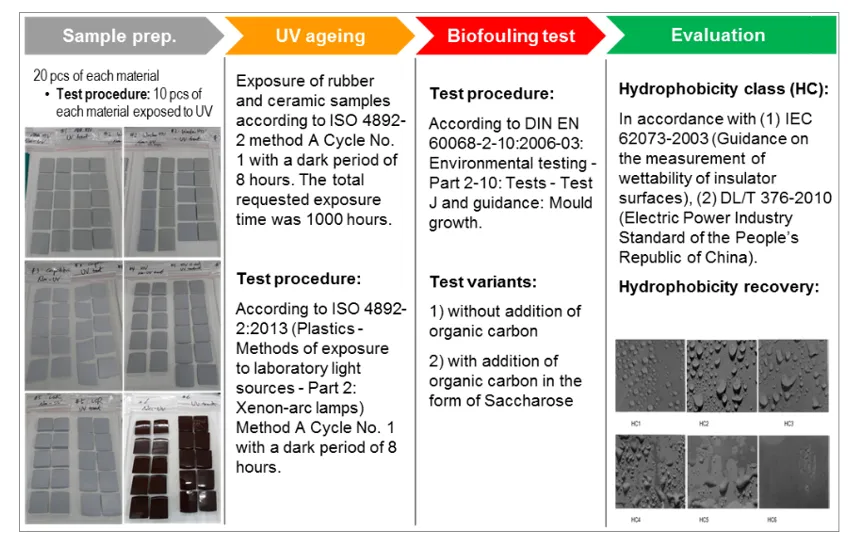
Accelerated Ageing: UV Exposure
The UV exposure test of the 6 different materials was carried according to ISO 4892-2:2013 Method A Cycle No. 1 with a dark period of 8h. Total requested exposure time was 1000h.
Biological Test: Mold Growth, DIN EN 60068-2-10
Testing was performed according to DIN EN 60068-2-10:2006-03. Surfaces of specimens were inoculated with a mixed suspension of different mold fungi (9 types with 1.0 x 10⁶ spores/ml concentration) and incubated under optimal conditions for development of fungi. Test climate was 28 ±2°C with relative humidity of 95 ±4%.
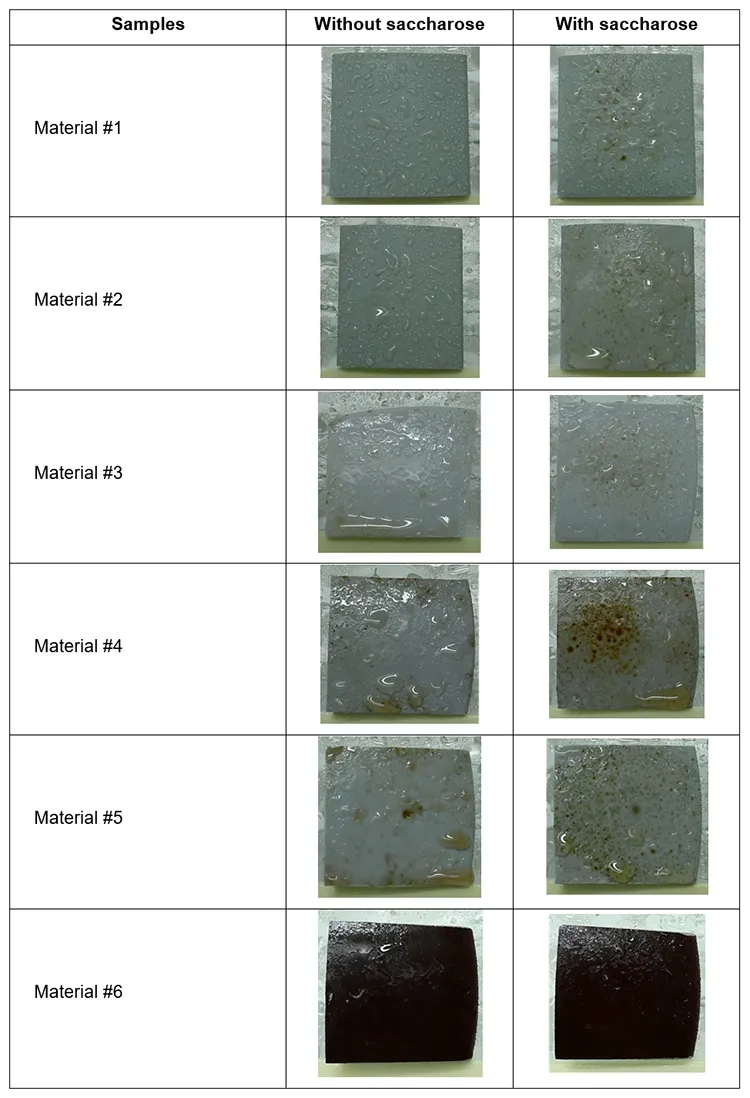
Two variations of the test were performed: for example, in the case of UV aged test objects, 5 pcs were tested with addition of saccharose and 5 pcs without. After 2 and 4 weeks, infestation on the surface was evaluated by visual examination.

Hydrophobicity Classification Test
When the biological testing was completed, hydrophobicity class was determined. Sample surfaces were inclined 25° with respect to the plane and sprayed continuously for 25s using de-ionized water. Immediately after the end of spraying, HC was determined according to IEC 62073-2003 (Guidance on the measurement of wettability of insulator surfaces) and (2) DL/T 810-2002 (Electric Power Industry Standard of China – Technical Specification for ±500 kV D.C. Long Rod Composite Insulators), where HC 1-2 corresponds to a hydrophobic surface and HC 6-7 to a hydrophilic surface.
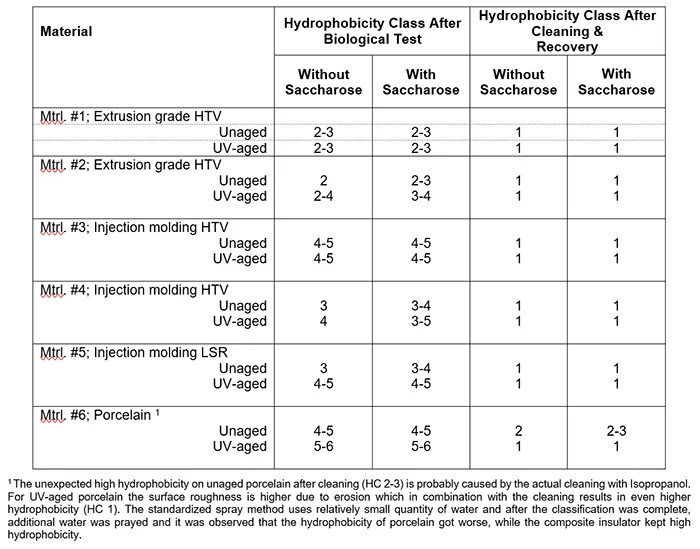
After determining hydrophobicity class, the fungi covering the insulator surface (the so-called biofilm) were removed using tissue dampened with isopropanol and then rinsed with de-ionized water. Specimens were then placed in a dust free container and kept under standard laboratory conditions (23°C, 50% RH) for 48 consecutive hours before hydrophobicity class was determined, again using the method described above. Table 2 and Fig. 2 show the results.
Second Biological Test on UV-Aged Insulation Materials
To understand whether and how soon fungi would again form a biofilm on insulators that had already undergone fungal infestation, a second biological test was performed. To encourage fungal growth, only UV-aged materials were considered in this run, and the test was performed under one variation with the addition of saccharose.
Compared to the first HC test, the HC level of all HTV silicone materials was similar or somewhat improved, while the hydrophobicity of the LSR insulator and the porcelain insulator was remarkably superior to the previous level, i.e. from HC 4-5 to HC 1-2, and from HC 5-6 to HC 1-2, respectively. The reason for such improved hydrophobicity for these materials was not clear.

Case Study
A 145 kV class service bushing fitted with an HTV type polymeric insulator that had been returned by a concerned asset owner from service in a tropical environment was tested for wet performance. The goal was to determine whether its electrical performance under wet conditions had been reduced because of the biofilm. Tests were selected to reflect as many operating conditions as possible and performed in the following sequence:
• Hydrophobicity classification, IEC TS 62073;
• Power frequency voltage withstand test with partial discharge, capacitance and tanδ, level measurement. Level 10-310 kV, 50 Hz;
• Wet power frequency voltage withstand test according to IEC 60137, level 275 kV, 50 Hz, 1 minute;
• Wet power frequency voltage withstand test according to IEEE std 4, previous practice in the USA, level 275 kV, 50 Hz, 10 seconds;
• Power frequency voltage withstand test with partial discharge, capacitance and tanδ, level measurement. Level 10-310 kV, 50 Hz;
• Hydrophobicity classification after cleaning the insulator with isopropyl alcohol and a resting period of 48 hours, IEC TS 62073;
• Wet power frequency voltage withstand test according to IEC 60137, level 275 kV, 50 Hz, 1 minute;
• Wet power frequency voltage withstand test according to IEEE std 4, previous practice in the USA, level 275 kV, 50 Hz, 10 seconds;
• Power frequency voltage withstand test with partial discharge, capacitance and tanδ, level measurement. Level 10-310 kV, 50 Hz.
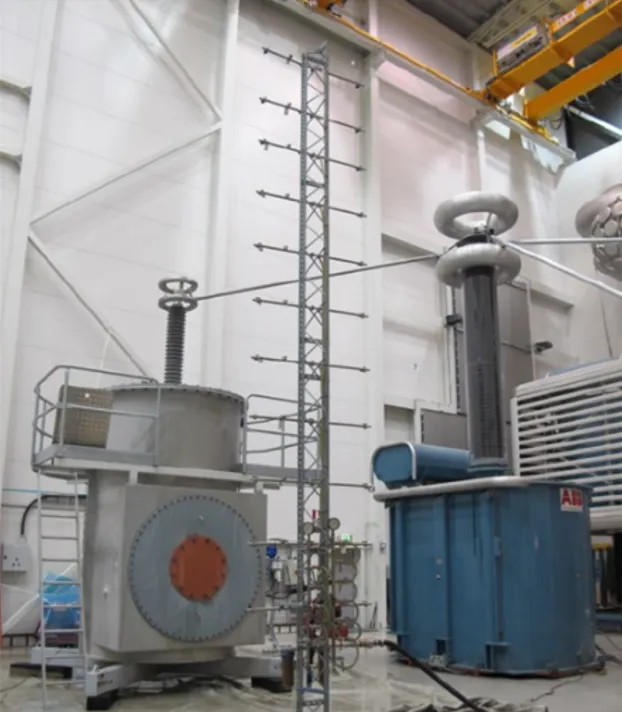
Fig. 3 shows the test circuit for the wet power frequency withstand test.
Hydrophobicity Classification
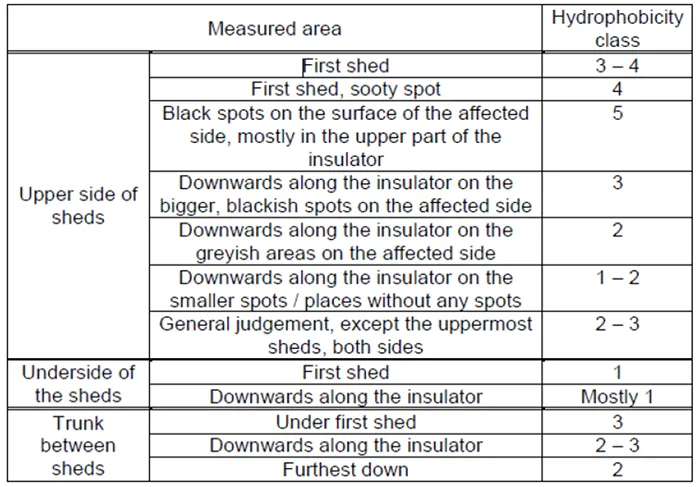
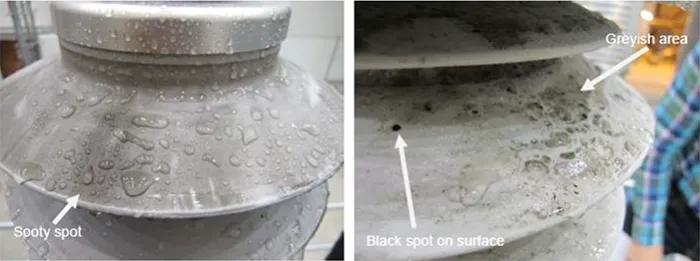
The classification was done in line with IEC TS 62073. Table 3 and Fig. 4 present the results.

Electrical Testing Under Dry Conditions
The study began with an electrical routine test in line with IEC 60137 ed. 7 to verify that the bushing’s internal insulation was intact. The bushing passed and had a partial discharge level of less than 5 pC at system voltage and withstood 310 kV during the dry 1-min AC voltage withstand test.
Electrical Testing Under Wet Conditions
Wet power frequency voltage withstand test (according to IEC 60137 ed. 7).
Precipitation rate during test:
• Vertical component: 2 mm/min
• Horizontal component: 1.5 mm/min
• Conductivity: 113 µS/cm

Wet power frequency voltage withstand test (previous practice in U.S.), according to IEEE Std. 4, 2013.
Precipitation rate during test:
• Vertical component: 5 mm/min
• Horizontal component: 3.7 mm/min
• Conductivity: 151 µS/cm


Cleaning & Re-Testing
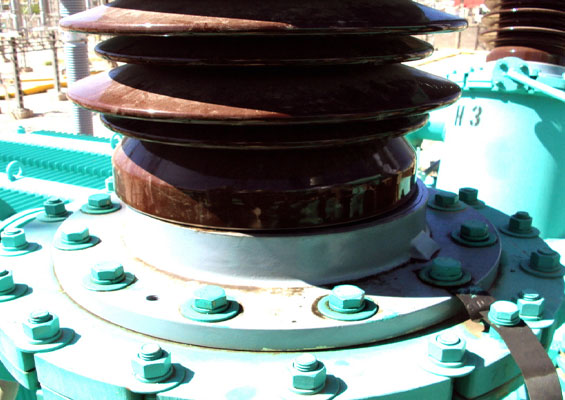
The insulator was cleaned with isopropyl alcohol. Some of the black biological material was still visible after cleaning. The bushing then rested for 48h before hydrophobicity classification was conducted once more. Hydrophobicity class was HC: 1-2.
Wet power frequency voltage withstand tests and finally the electrical routine test were repeated. Results fulfilled all required criteria.
It can be concluded that cleaning was not necessary to maintain the wet power frequency voltage withstand according to IEC 60137.
Summary
Many publications have addressed biofilms that can readily form on HV outdoor insulation, both on ceramic and polymeric types. Most such cases have been reported from tropical environments. Biofilm formation on insulators occurred predominantly in areas shaded from direct sunlight, indicating that partial shading was necessary to prevent desiccation. Insulator geometry therefore also influences extent of biofilm formation.
The most common impact of biofilm formation is reduction in hydrophobicity, which reduces wet flashover voltage of insulators. Such reduction in wet flashover voltage was in general higher for ceramic insulators than for polymeric insulators.
In general, it has been reported that silicone rubber is highly resistant to corrosion induced by microorganisms. Biofilms can be removed by a combination of washing and wiping. Biofilms also could contain organisms that produce pigments causing discoloration that is not removable. These problems, however, are only aesthetic and do not affect insulator performance.
Looking specifically at experience with silicone rubber, some publications have reported that extent of biofilm formation can differ for different types of silicone material. Indeed, extent of growth appeared to depend on the type of rubber formulation. However, since the insulators were also of different design, effect of shed geometry could not be excluded.
Comparing different types of silicone rubber test plates in a controlled laboratory environment revealed that amount of biofilm formation differed between formulations. It is believed that such differences are due to different fillers or other additives. They may also be the result of differences in surface roughness.
Conclusions
Controlled laboratory testing has shown that all virgin materials will support biological growths to various degrees. Addition of an external nutrition source (e.g. saccharose) increased amount of biofilm, as expected.
It was noted that extrusion grade silicones exhibit lower biofilm coverage and higher hydrophobicity (HC: 2-3), compared to injection molded silicones, LSR and porcelain, which became slightly less hydrophobic (HC: 3-5). UV-aged materials exhibited higher coverage by biofilm compared to corresponding virgin samples.
It was also observed that re-colonization became slower after cleaning, for both silicone and porcelain surfaces.
A study was conducted on a 145 kV bushing removed from service and returned by a concerned asset owner due to presence of biological growths. Nonetheless, this same bushing met wet AC voltage withstand performance as per IEC 60137, without cleaning.