Sulfur Hexafluoride (SF6) with its excellence in insulation and arc quenching performance, however with a very high global warming potential (GWP), has for the last 50 years been dominant in high voltage equipment. An initiative from Original Equipment Manufacturers (OEMs), end-users and governing bodies worldwide has focused on trying to eliminate or reduce the carbon footprint of high voltage equipment. In this regard, global as well as local guidelines were established to invest in and develop alternative technologies to replace SF6.
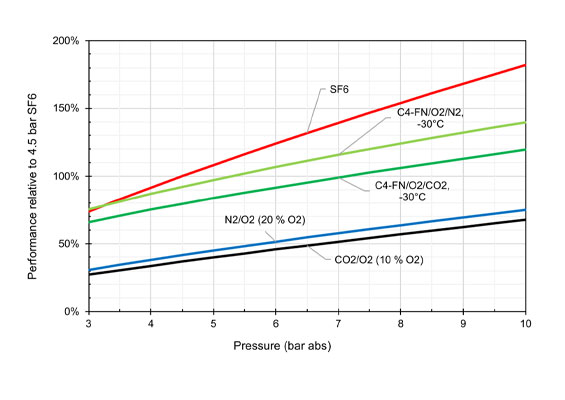
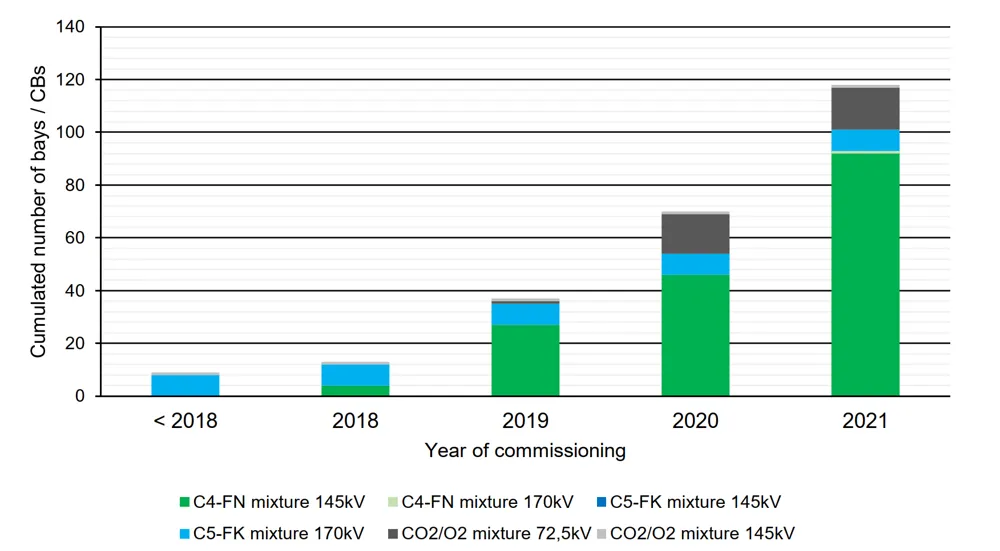
One alternative is carbon dioxide (CO2) or nitrogen (N2) mixed with oxygen (O2) and C4-FN (fluoronitrile), a synthetic molecule. This eco gas performs similarly to SF6 and allows us to build state-of-the-art high-voltage equipment on the same principles as for SF6 technology (circuit-breaker included), occupational health and safety standards, and gas handling procedure. A crucial component to interconnect high voltage equipment equipped with alternative gases to transformers are Transformer bushings. With the evolving technology of next generation high voltage equipment using eco gas, mainly Gas Insulated Switchgear (GIS), have set a demand towards the transformer business on how its bushing shall be developed and adapted for alternative gases. Fig. 1 illustrates the growing trend of installed SF6-free switchgear.
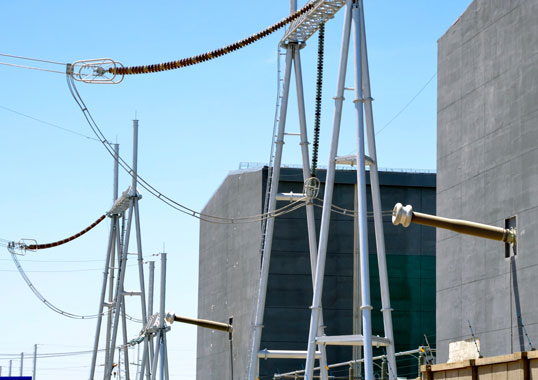
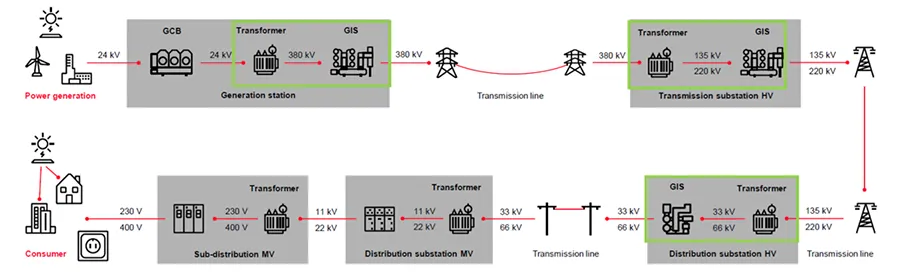
By transitioning from SF6 GIS to SF6-free alternatives, the potential reduction of total CO2eq has shown to be up to 70%. The transformer bushing plays a critical role in ensuring sustainable energy transmission from point A to point B, which can be identified in the green markers in Fig. 2.
Today, there are no alternative gases that are comparable to SF6’s insulation and interruption performance. Still, using a C4-FN mixture offers advantages:
• Reduction of 99% of CO2equivalent compared to SF6 through lower GWP100 of the gas mixture.
• Maintaining the equipment footprint identical to SF6 solution by avoiding high usage of materials which increases cost and total carbon footprint while ensuring performance.
• Good arc quenching capabilities that allow users to use the same self-blast or puffer technology, as developed and used in the electric grid over the last few decades for SF6.
Plan to attend the upcoming 2025 INMR WORLD CONGRESS in Panama. Project Manager, Philip Hoang of Hitachi Energy will present emerging GIS technology that uses eco gas mixtures to replace SF6. He will explain how interfacing components must be adapted to fit based on extensive qualification processes to avoid potential material degradation and discuss how a solution was achieved that can help OEMs and TSOs achieve global net-zero emission.