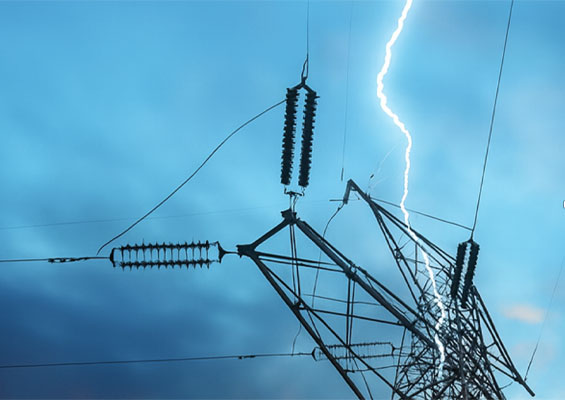
Lightning is a natural atmospheric phenomenon characterized by high-current electrical discharges of very short duration. These discharges can occur between clouds or between clouds and the ground, producing both direct and indirect impacts on infrastructures, the environment, and human activities. Overhead power lines are particularly vulnerable since lightning strikes can lead to insulation flashovers, conductor damage or induced voltages, resulting in unscheduled outages which may even lead to partial or general blackouts.
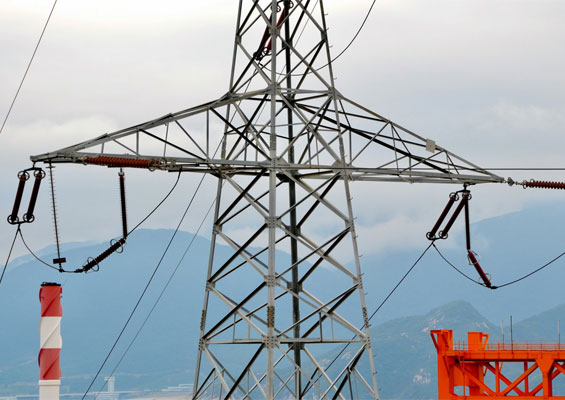
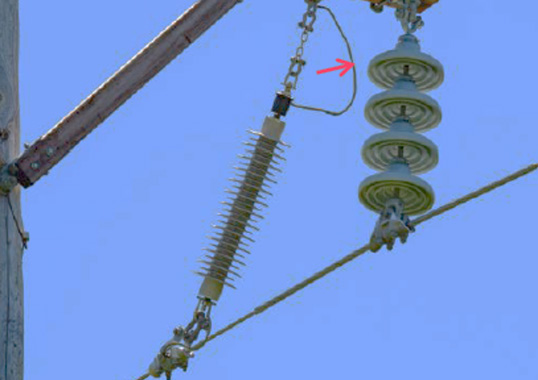
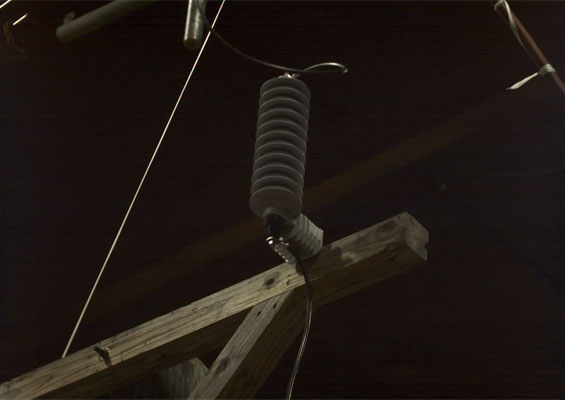
For many utilities worldwide, transmission line arresters (TLAs) have emerged as one of the most reliable and cost-effective solutions to enhance transmission line performance against lightning. By clamping surge voltages and preventing insulator flashovers, TLAs significantly reduce the number of lightning-triggered interruptions, thereby improving system reliability. Installing arresters indiscriminately on every tower is neither economically feasible nor operationally necessary. Optimal placement of TLAs is therefore a strategic decision. Although lightning is inherently unpredictable in location and magnitude, long-term observations reveal patterns of occurrence that can be analyzed and used to design effective mitigation strategies.
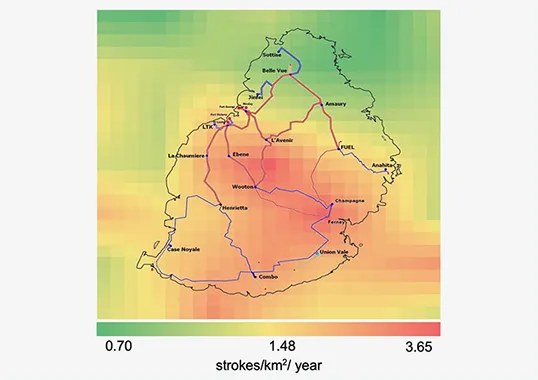
As such, a data-driven approach based on historical lightning activity offers a rational framework for prioritization. By mapping ground flash density (GFD) across a region and overlaying this with the existing transmission grid, the lines and specific segments which are most at risk can be identified and targeted for arrester installation. This ensures a balance between cost-efficiency and performance improvement.
Literature Review
Lightning protection of overhead transmission lines has always been the subject of extensive research and strategies. Several mitigation approaches have been adopted by utilities worldwide. Common best practices to protect the power lines from direct and indirect effects of lightning strikes include:
1. Installation of overhead shield wires (or optical ground wires, OPGW) above phase conductors, designed with adequate shielding angles (30°) and properly grounded at each tower, to intercept direct strikes;
2. Improved insulation of insulators to raise the critical flashover voltage (CFO), thus lowering probability of flashover due to lightning surges;
3. Reduced tower footing resistance (below 10Ω) using counterpoise wires, ground rods, or soil conditioning, to ensure effective dissipation of lightning current and minimize backflashovers;
4. Deployment of TLAs to clamp surge voltages and protect insulator strings.
Performance of Transmission Line Arresters
Reports worldwide have consistently identified lightning as a primary cause of unscheduled outages in transmission networks. For example, in Malaysia, Japan and China, lightning accounts for most line trips and equipment failures. Research has also demonstrated that TLAs provide an effective supplementary measure by clamping surge voltages across insulators, thus preventing flashovers. Documented observations from utilities highlight significant improvements in line performance following strategic installation of arresters, even when applied only to selected towers along vulnerable line segments. For example, a case study carried out in Brazil for a 230 kV transmission line with 231 towers and 105 km long demonstrated that selective arrester placement guided by soil resistivity and fault history significantly improved lightning performance.
Researchers further presented a methodology combining the Electro-Geometric Model, Monte Carlo simulation, and genetic algorithms to minimize the lightning flashover rate (LFOR) of transmission lines in Iran. Their study showed that optimizing arrester rating, footing resistance, and insulation strength could achieve target lightning performance at minimum cost, with arresters proving most beneficial for 132 kV lines. Another research effort applying fuzzy logic to a 150 kV transmission line in Southern Sulawesi, Indonesia, identified 6 critical towers for arrester installation over 142 towers, which reduced lightning-induced voltages by about 15% compared to the unprotected system.
Plan to be at the upcoming 2025 INMR WORLD CONGRESS in Panama. Dr. Ismaël Adam Essackjee, Manager (Transmission) at the Central Electricity Board, will review how the first Ground Flash Density (GFD) map of Mauritius was developed, illustrating the geographic distribution of lightning activity across the island. He will explain that one of the direct applications was identifying transmission lines and sections most susceptible to strikes to prioritize implementation of mitigation measures to improve lightning performance. He will also propose a data-driven methodology for strategic placement of transmission line arresters (TLAs) based on a decade of lightning activity data and show how this deployment significantly enhanced resilience of the Mauritian power system in a framework easily adapted by other island-based utilities.