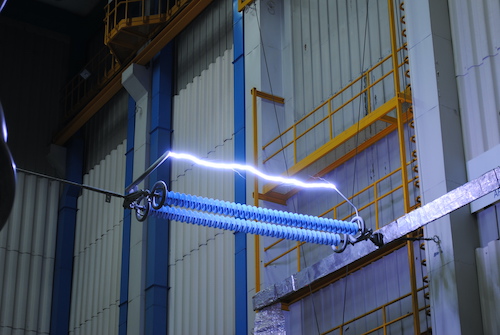
Room temperature vulcanized (RTV) silicone coatings for cap & pin insulators have evolved as an effective solution to address pollution problems on high voltage and extra high voltage power lines. Factory application of coatings involves a meticulous process that ensures a uniform and durable layer each time.
Coatings provide a protective layer that enhances insulator resistance to environmental contaminants, ensuring optimal performance and service life. The coating acts as a barrier against pollutants such as dust, dirt, and chemical residues, preventing them from adhering to insulator surfaces. Insulators remain clean and functional, reducing need for frequent maintenance cleaning.
This edited contribution to INMR by Principal Engineer Lines & Cables, Glenn Stapleton, at Powerlink Australia highlights a recent case of RTV application on a HV transmission network and adds a tropical usage context to existing cases of success internationally.


Powerlink Queensland is the government-owned body owning, developing, operating and maintaining transmission assets with operating voltages from 110 kV to 330 kV across the State of Queensland. Powerlink’s network runs 1700 km from Cairns in the far north of the state and south to the New South Wales state border, comprising close to 16,000 circuit kilometres of transmission lines across these voltages.
Powerlink has historically relied on glass and porcelain disc insulators to form the building blocks for transmission line insulation up to 330 kV. The primary failure mode for disc insulation in the past has been pin corrosion on lines close to coastal localities in North Queensland, with recorded service life in extreme cases of less than 15 years. Fitting new discs with zinc sleeves on the pins only succeeded to extend life by about 20%, i.e. only a 3-to-5-year life extension for these extreme environments subjected to onshore winds.
Starting 1997, non-ceramic insulators (NCIs) were adopted as standard insulation for all new lines and by 2002, some 22,000 NCIs were installed. However, by 2002 Powerlink’s insulation selection policy was again reviewed, particularly regarding deficiencies with NCIs that included:
a. uncertainties for serviceable life in particular environments
b. susceptibility to damage from bird pecking, first thought to occur only when de-energized but later discovered to also affect energized units in areas of high-risk bird exposure;
c. lack of understanding how best to diagnosis insulator condition prior to commencement of live working (for a network operator that relies on this approach for all maintenance).
Standard design builds therefore reverted to glass and porcelain discs, with NCIs applied only for defined applications. This strategy has continued to the present day and current application of NCIs for new builds or refurbishment at Powerlink is now limited to:
• asset installations close to the public for aesthetic reasons;
• compact construction using insulated cross-arms;
• like-for-like replacement on nominated assets as part of end-of-life refurbishments;
• areas with very heavy to extreme pollution.
Up to 2022, no applications for RTV coatings for transmission line disc insulators had yet been undertaken. For extreme pollution applications to this point in time, preference was for targeted placement of small populations of NCIs to address performance issues. For earlier generation lines (pre-1997), some early generation NCIs were used but with limited success. The last resort was relying on designs with very high creepage discs, whenever these could be accommodated within defined tower geometries.
In the case of one specific transmission line, a trial using resistive glaze insulators was conducted to address severe industrial pollution issues and move away from the past practice of greasing of insulators on this asset. This small population of greased insulators were, in fact, Powerlink’s first experience with ‘coated’ transmission line insulators. Resistive glaze insulators were ultimately not adopted, and NCIs remain the preferred option for extreme pollution transmission service environments.

A Case to Consider RTV Coated Disc Insulators
High pollution insulation designs up to 2022 generally adopted the following sequence of design and operational considerations to address pollution performance in most high pollution scenarios. Note: Solutions and resulting insulation selection considerations for common problems are summarized below in order from least to most severe applications:
a) Standardization for all new builds to design with anti-fog profile disc insulators offering increased creepage over normal profile discs. Tower geometries had clearances to permit specific creepage distances (SCD) up to 28 mm/kV (i.e. high pollution designs). In areas with significant wetting durations, proximity to the coast, and appearance of biological growths, targeted washing programs were required several times per year.
b) For inland and arid portions of the network, external ribbed (open profile) discs were adopted for large-scale deployment from 2010 onwards. These were the first application in Australia of these insulator designs, seen primarily in China from domestic manufacturers. They were selected for ease of natural washing in low rainfall areas but not approved for installation in portions close to the coast.
c) Where designs required more than 28 mm/kV and could easily be accommodated by standard tower geometries, NCIs were the default application. In wet tropical locations close to the coast, with high annual rainfall and monsoonal weather patterns, stresses associated with pollution and wetting duration resulted in life expectancies of only up to 15 years for 275 kV voltage stress. Disc insulated lines originally considered for these areas would be much less reliable in terms of pollution performance but offer a life expectancy longer than the NCI alternative.
d) NCIs with extremely large SCD (> 35 mm/kV) were selected for extreme pollution associated with industrial sources (e.g. bauxite processing to alumina) and for assets installed near cooling towers for coal-fired power stations or adjacent to settling ponds associated with these types of installations. Prior to availability of higher reliability NCI designs, earlier generation NCIs used leakage current monitors to either trigger operational interventions such as washing or to prepare for outages.
As less reliance on NCI options was increasingly the preferred asset management strategy at Powerlink, the case emerged to consider RTV coatings as a templated design solution for disc insulators. This was regarded as particularly important whenever any asset began to experience issues with increased outage rate. Field inspections suggested these outages were being triggered by pollution mechanisms.
Below is a review of the case study for considering re-insulating an existing transmission line with factory-coated RTV glass insulators.

Case Study: Performance Improvement for 275/132 Dual Voltage Transmission Line in Wet Tropics
This case study involves performance of a line arrangement presently in service in the Powerlink network. The design features double circuit vertical construction but with dual voltage, two circuit arrangement (see Fig. 1).
Circuit A (left) features a 132 kV insulation design, while circuit B (right) features a 275 kV insulation design. The asset was initially commissioned with both circuits at 132 kV. When operational triggers arose, Circuit B would migrate to 275 kV operation with minimal physical asset changes on the transmission line structures.
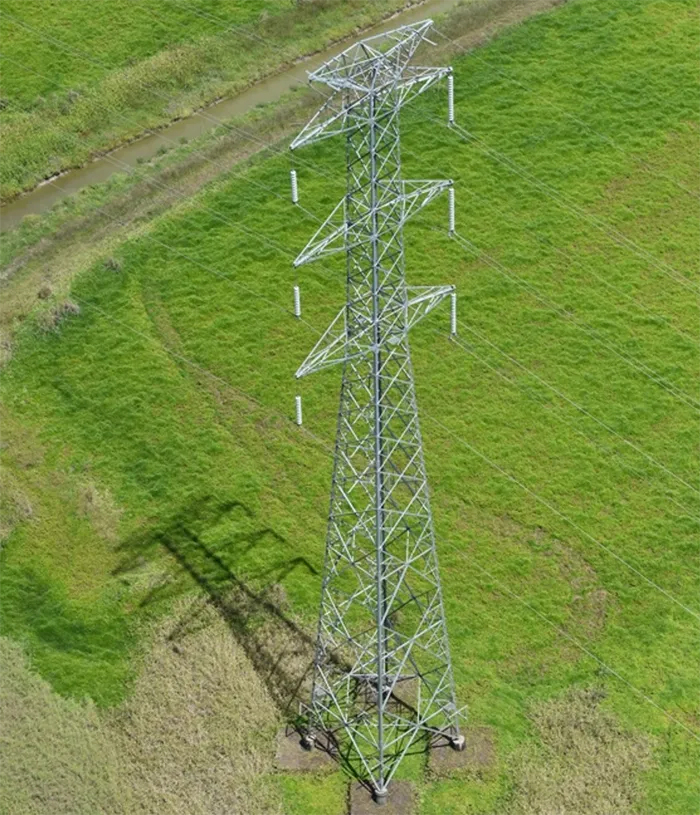
The transmission line was built in several stages, starting in 2008. In its final configuration, when Circuit B was energized at 275 kV, it would reach 350 km length.
The 132 kV circuit was configured to form individual shorter circuit length sections since this side was routed into several intermediate 132 kV substations, alongside the 275 kV in its ultimate configuration.
From initial commissioning as double circuit 132 kV operation, circuit performance was extremely reliable. The transmission line operated in a staged approach with this configuration, commencing 2008, for approx. 13 years before Circuit B was commissioned at 275 kV.
Table 1 summarizes the insulation pollution design characteristics for the double circuit line.
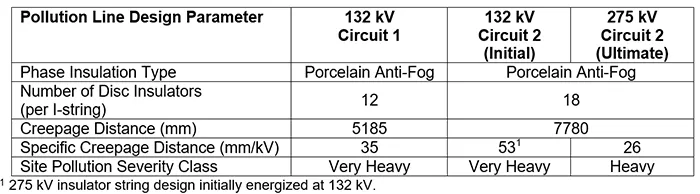
Commencing 2021, Circuit 2 was energized at 275 kV, resulting in the adjusted pollution design particulars (also outlined in Table 1 with Circuit 2 operating at 275 kV). From this energization in the dual voltage configuration, pollution outage performance for the 275 kV exceeded design performance expectations. This required an urgent investigation into performance issues and flashover modes.
To better understand the performance issue at hand, it is worthwhile revisiting the basis of design for transmission line assets in place at the time this asset was planned.

Legacy Pollution Design Standards & Insulator Selection
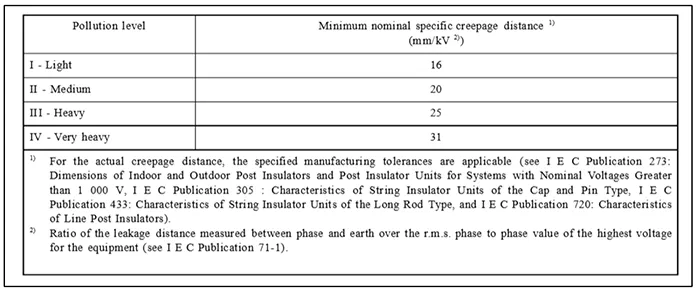
Tower geometrical designs for the dual voltage configuration commenced prior to 2008. Since the line was to be constructed in several stages, the tower family design was developed for the first stage but formed the basis for the structures used for all remaining stages of the project. Pollution design standards used for transmission lines at this time were defined by AS 4436, which was underwritten directly by the 1986 version of IEC 815. Pollution levels were defined by Table II from AS 4436 as outlined in Table 2.
At this point in time, insulation pollution designs in Queensland were predominately qualitative in nature and highly dependent on applying experience for regionally based asset performance for similarly located new transmission lines.
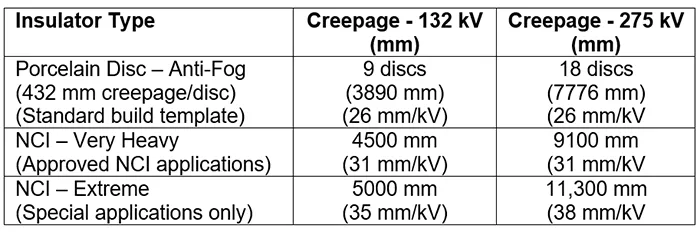
In 2008, templated pollution designs for line insulation for porcelain, glass and NCIs were standardized as summarized in Table 3. Application of such pollution design approaches allowed standardization of design assemblies across the network and facilitated logistics and spare philosophies for minimizing insulator variants held in the warehouse as system spares. NCI coupling dimensions were designed to match the coupling distances for the porcelain disc templated solutions in Table 3.
Tower designs and geometrical development considerations for the dual voltage asset were based on the highest operating voltage of 275 kV and correspondingly used to size crossarm dimensions and vertical phase spacing. Insulator coupling distance assumptions, selected from the largest dimension of either the porcelain disc insulator assembly or the standard NCI application was assumed for the development of electrical clearances for the suspension structure “I” string configuration. Insulator string lengths were based on historical performance for existing assets in the vicinity, some of which had previously encountered issues with elevated outage rates.
Specifically for 275 kV assets, limited operational experience was available for this voltage level in this general asset locality. Therefore, a more global view of expected performance was considered by using the positive operational experiences with 18-disc assemblies (26 mm/kV) used exclusively for a large population of lines insulated consistently at this SCD level built from the mid 1990’s. Given that bulk transmission lines were no longer delivered with NCIs as of 2008, disc insulators were the default option implemented for design of each line section.
For 132 kV designs in this area, wider experience and associated performance data was available. Based on direct observations, some existing 132 kV assets had not performed well historically in a number of localities near this transmission line. Existing lines with 9 normal profile insulators (16 mm/kV) in this vicinity had experienced elevated outage modes associated with pollution in combination with environmental conditions consisting of bird guano or bird streamer faults from nesting species.
The geometric tower development considered a maximum coupling distance equivalent to 18 porcelain disc insulators and the pollution design parameters outlined in Table 1 were adopted. Given the limiting clearance was established by the 18-disc 275 kV I-string assembly, longer 132 kV strings were straightforward to implement for the 132 kV circuit without penalising the tower structural design. This explains the adoption of 12 anti-fog insulators in Table 1, over the standard 9-disc anti-fog assemblies in place at the time as defined in Table 3. This was undertaken pre-emptively for the 132 kV circuit whilst the templated 275 kV template was adopted to avoid a tower design sizing penalty in terms of increased tower height and tower weight.

Emerging Pollution Performance Issues
Fig. 2 outlines the step change for transient outages after commissioning of Circuit B from 132 kV to 275 kV. Eleven transient faults occurred in the space of 14 months from the changeover in voltage. As is normal for all network outages, field patrols were immediately scheduled following the event to categorize and rectify the faults.
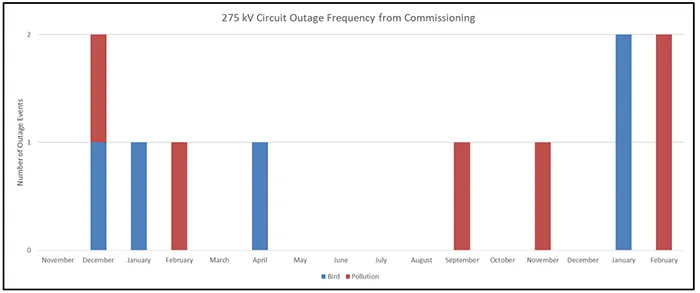
Post-event field patrols and engineering assessment of outage data suggested almost a 50/50 split for the cause of the fault. Storms and lightning events were not identified in the outage vicinity. The 50/50 split was determined from investigative data consisting of:
a) Evidence of roosting birds, nests on tower and guano on or near the insulator assemblies. Correlating the fault to the time of day indicated some faults were early morning and late afternoon consistent with bird activities and flight activity aligning to suspected bird streamer faults.
b) Faults not from bird activity related and correlated along specific recurring locations of the asset. Storms were not noted in the vicinity at the time of faults. A review of weather data from local weather stations indicated faults coincided with other contributing factors including:
i. 100% humidity
ii. High dew point
iii. Fault occurrence timing in the middle of the night.
For both the suspected bird related outages summarised in a) and pollution-initiated faults for b) above, outages occurred only on the 275 kV (Circuit B). No outages were recorded on the 132 kV Circuit A in the 14-month period of interest.
Such behaviour is understandable in terms of several notable key design factors including:
a) the large airgap for the 132 kV circuit on a structure with 275 kV optimised clearances
b) the increased string length of 12 insulators instead of a typical templated 9-disc anti-fog design
c) the design of the string arrangements to provide a symmetric appearance of the structure with two differentially sized insulator strings.
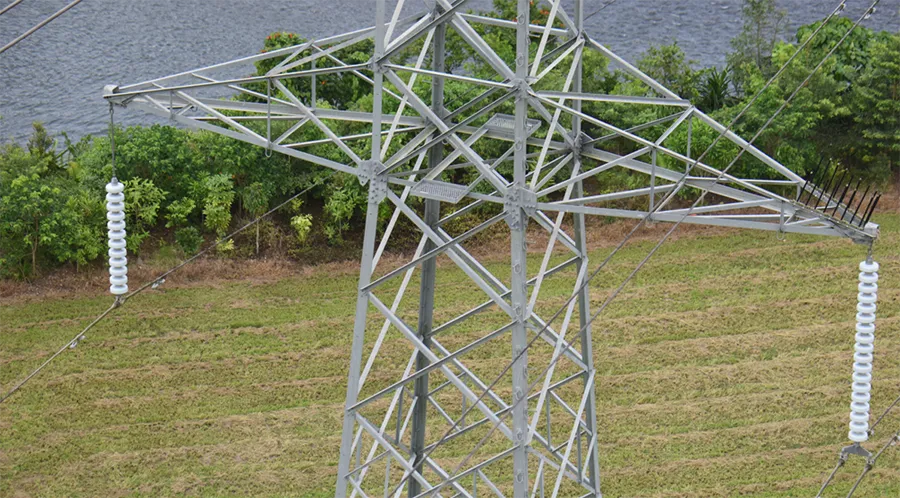
Fig. 3 outlines the dual voltage differential insulation and airgap design for the asset. Conductor positions are symmetric across both circuits with equal heights above ground from the use of extension links in the 132 kV hardware assembly. The extended offset design for the 132 kV insulator string saw no streamer faults initiated on the 132 kV side of the structures along the entire line length.

Pollution Severity Assessment Using IEC 60815
As highlighted in Fig. 2, outage mechanisms were categorised in two primary categories as bird related or pollution related incidents, based on engineering review and categorisation of field patrol data collated from site. Addressing bird related streamer faults did not require a site pollution severity (SPS) investigation in accordance with IEC 60815. Instead, it relied upon targeted placement of bird nest and flight activity deterrence on the crossarm above the 275 kV circuit only as shown in Fig. 3.
Pollution related incidences were not directly related to the accumulation of guano on insulators and predominately occurred in and could be grouped in regions for the long asset. A high proportion of the outages were only grouped in an approximate 50 km section length out of the total 350 km circuit length. The line position, distance from the coast and unique topography for this impacted line section of the asset is shown in Fig. 4.
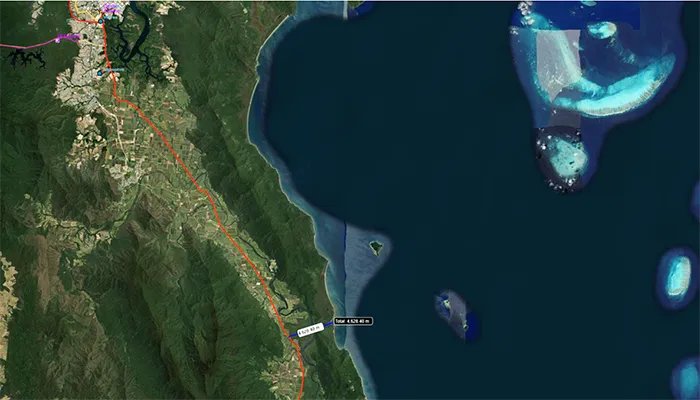
The section of line in Fig. 4 travels through a region celebrated as Australia’s wettest location, receiving more than 4000 mm of rain annually (168 in). It has distinct wet and dry seasons. The wet season is driven by monsoonal weather conditions typically from Dec. to May. The term dry season in this locality is a bit of a misnomer in that the season would better be described as a ‘less wet’ season. In this drier seasonal window (typically June to Nov.), rainfall will still typically exceed 100 mm per month. Humidity remains high all year, averaging between 80% and 90%.
In terms of temperature, the climate is best described as a tropical rainforest with stable, warm temperatures year-round. Summer months average 31C in the warmest months (Jan., Feb.) to approx. 24C in the cooler months (June to Aug.). Average low temperatures drop to around 17C in the cooler months and 23C in the warmer months.
Such conditions lead to persistent condensation forming on surfaces of electrical insulation, combined with extended regular wetting due to seasonal trends in rainfall (as described above). This type of environment also supports formation of biological growths on the underside protected creepage for anti-fog profile disc insulators.
As evident from these conditions, a high incidence of condensation forms regularly on the surface of electrical insulation in this environment, coupled with extended regular wetting durations due to the rainfall seasonal trends above. The environment also promotes large biological growths on insulation, particularly on the underside protected creepage distance of anti-fog profile insulators.
Fig. 4 illustrates the line route passing between two mountain ranges, crossing volcanic soil farmland used for sugar cane plantations. Crop preparation, maintenance, and annual harvests generate dust and pollution, with some effects often linked to fertilization of crops. Transient outages are uncommon from cane fires, since crops here are typically cut without prior burning.
Although the line is over 4 km inland and shielded by the easternmost mountains, prevailing winds allow salt-laden air and occasionally, conductive fog to travel up the valley. Salt air enters through a southern opening in the eastern formation where a large river meets the ocean.
Site severity assessment was required to be undertaken in the vicinity of all recorded flashover locations along the complete route length. Given the flashed structures themselves had new insulation installed to replace the flashed porcelain units, adjacent structures were sampled in accordance with the analysis methods outlined by IEC/TS 60815-1.
Site severity assessment required measurement of surface accumulated conductive and non-soluble products on the insulators removed from service. This was required in the absence of site specific or line route monitoring by either pollution sensors or directional dust gauge measurements. Leakage current monitoring data was also not available and are presently not in use by Powerlink.
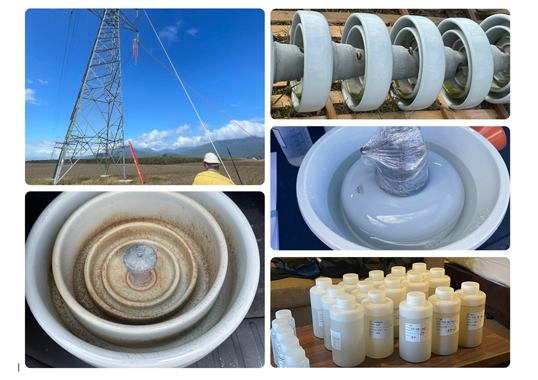
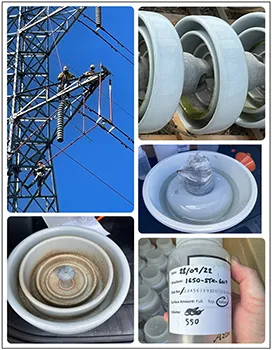
To avoid cross-contamination, insulators were removed from service using live line methods and sampled on site to avoid transporting and excessive handling of insulators before measurements were performed. The surfaces were sampled to determine the equivalent salt deposit density (ESDD). Suspended solutions were captured for transfer to an off-site laboratory to determine non soluble deposit density (NSDD) in accordance with IEC/TS 60815-1. The typical process followed is highlighted in Fig. 5.
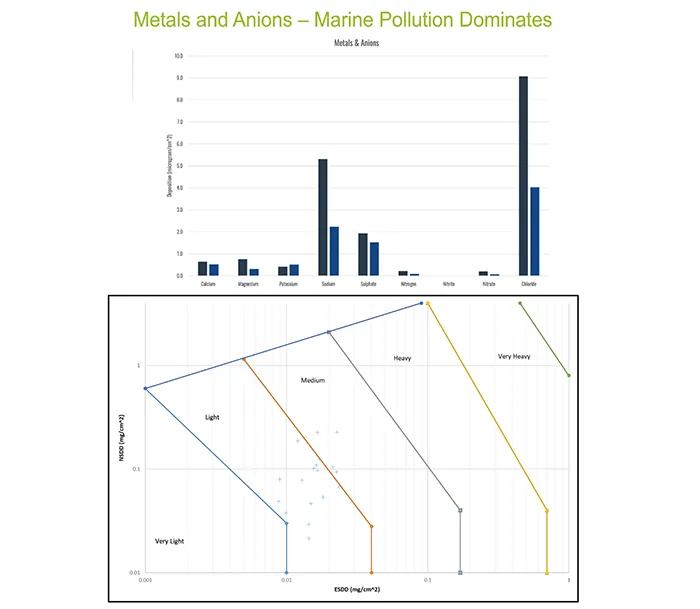
Fig. 6 presents observations gained from the site sampling locations. These showed that top surfaces were all naturally cleaned with the high rainfall, as was to be expected, and that most pollution accumulated at protected bottom surfaces. Result analysis indicated that all tested sites were medium or less pollution categories. Such results confirmed prevalence of Type B (liquid electrolyte) pollution effects in this portion of the line due to topographic and typical weather conditions.
Pollution Performance Rectification Options
As discussed in Table 3, the default option where disc insulation demonstrated deficient performance would involve deployment of NCIs with targeted placement. Given that outages had also occurred outside of the 50 km zone of interest in Fig. 4, targeted replacement of insulation would need to involve a significant proportion of the transmission line route in the absence of widespread ESDD and NSDD sampling data from every structure.
Due to the high wetting duration in this region, coupled with high electrical stresses at 275 kV, NCIs have low life expectancy based on benchmarked performance from other assets that obtained only 15 years of service before rapid degradation to failure. Widespread replacements with a large population of NCI insulators with significantly lower life expectation than disc insulators would be problematic from an asset life cycle perspective.
An NCI replacement option also presented other performance issues due to the lightning performance requirements for the asset, its long length, and the expected number of lightning strokes to the line per year across 350 km length. Table 4 demonstrates the issue where a re-insulation exercise is required to maintain the electrical withstand parameters for the string of disc insulators being replaced with an NCI.
Addition of metallic end fittings and corona rings to NCIs requires an associated increase in the NCI unit coupling length to match the arcing distance of the disc insulation string. Where arcing distances reduce, so too would lightning performance expectations of the re-insulated transmission line. If arcing distances were matched, coupling distances between the NCI and disc string being replaced are also misaligned and violating electrical clearance and ground clearance restrictions for the fixed structure geometry.

With NCIs not presenting an ideal re-insulation alternative, and no provision to be able to increase length of the 18-disc anti-fog string to increase creepage distance, factory RTV coated glass from existing approved suppliers was considered. Extensive reporting of success, operational experiences now passing 20 years and defined applications in tropical environments in other countries together provided confidence for Powerlink to adopt the technology.
However, additional detailed considerations, application trials and maintenance staff awareness training sessions were required as part of a successful RTV product ‘onboarding’ process.
Considerations in Insulation Re-Design
Addressing reoccurring outages with RTV insulator replacement for a long linear transmission asset is a substantial challenge. There are timing issues where all insulators would take substantial time to replace across the entire feeder length.
Initial sampling locations performed in Fig. 6 were expanded to further locations that had not experienced outage issues for benchmarking purposes. Use of surface sampling across several selected representative micro-climates and coastal vicinity lines allowed a prioritisation risk assessment to be performed to allocate insulator replacement resources from most critical to moderate criticality locations for initial insulator replacement. Areas of lowest criticality were not replaced and maintained their existing porcelain anti-fog insulators without changes in this exercise.
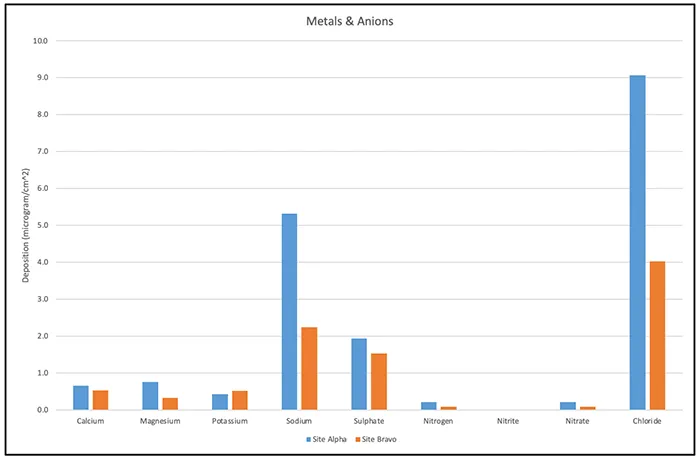
ESDD/NSDD sampling, plus analysis of constituent components making up the surface components (metals, anions as highlighted by Fig. 7) provided valuable input into this risk assessment process. Recurring fault locations with low ESDD and NSDD rankings further suggests the presence of Type B pollution, and prime candidate locations for initial RTV insulation. Sampling also located several line sections with a lower to no recorded outage frequency, but with sampled insulators exhibiting a high NSDD to ESDD ratio. These observations again demonstrated candidate locations for successful application of RTV-coated insulators. Several counterintuitive results were found, e.g. a few closely coupled line sections to the coast showed very low pollution contamination results from surface sampling.
The sampling exercise also looked at addressing the impacts of streamer faults and bird deterrence requirements on selected structures as well using local knowledge from patrol crews, structure and insulation inspection records showing the presence of nests of guano on these items.
The outcome of the sampling exercise recommended approx. 19% of the transmission line structures employ RTV factory coated glass insulators. RTV-coated insulators were only retrofitted to suspension I-strings, and I-string arrangements used on strain towers as pilot strings (i.e. candidate replacement insulators were all in vertical configuration). Horizontal strain insulator strings were not retrofitted given that for all recorded and identified locations outages had occurred only on vertical strings for 275 kV voltage. No RTV retrofits for any insulators were performed for 132 kV Circuit A.
The future roadmap could also consider parallel application of leakage current monitoring to aid operational decision-making and assess the ongoing performance for both RTV replacements or sections of line insulation not replaced in this first wave of re-insulation. Powerlink is closely observing development of next generation sensors of this type for consideration of application to lines in this region.
A key question remained: for purchase specification of RTV coated insulators, would these be complete coating (i.e. for top and bottom surface variants), or partially coated (e.g. bottom only) disc insulator units? Satisfying two key criteria by Powerlink resulted in the recommendation to purchase bottom only coated units:
1. High rainfall and thus effective washing of unprotected creepage on the top of all insulators in all locations sampled;
2. Requirement that all replacement RTV strings needed to consider live methods for replacement. Restricting coatings to bottom surfaces offered lowest risk of handling damage to very thin coatings using rigging and tooling methods associated with insulated stick installation.
At time of purchase, updating technical specifications was hampered by lack of consistent industry guidance from International Standards. These should ideally cover issues such as agreed approaches to:
• type-approval of factory coating methods;
• coating manufacture & application technique;
• ideal coating thickness; and
• adhesion validation for large purchase batches.
Changed Management for Installation Logistics & Handling
Powerlink typically performs transmission line insulator replacement tasks live. As such, methods for erection, handling and installation of coated insulators to minimize potential adverse impact to the coating were regarded paramount during the ‘onboarding’ process.
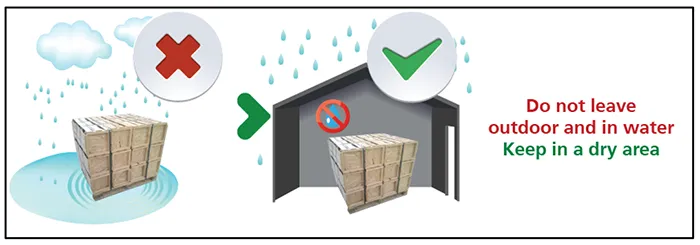
As outlined in Fig. 4, this section of line passes through Australia’s wettest locality. Manufacturers provide guidelines for storage and handling of coated insulators to ensure they enter service with no risk that poor handling prior to installation will compromise subsequent service performance. When units on the order of 10s of thousands require installation in such an environment, care must be undertaken to store these under dry conditions while awaiting erection. Also, to properly stage them to site in a controlled manner to avoid moisture damage to crates that could also adversely impact integrity of the coating (as suggested by guidelines as shown in Fig. 8).
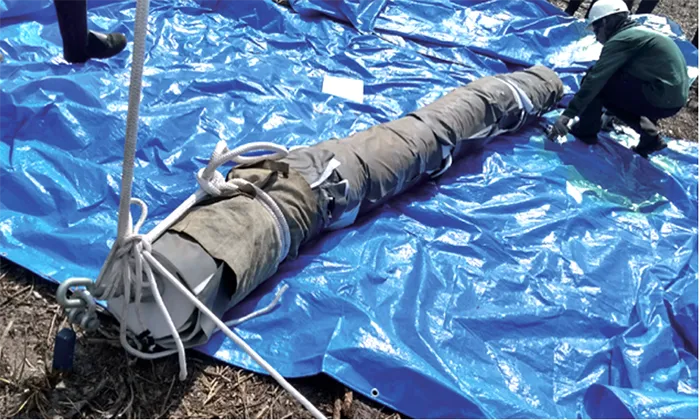
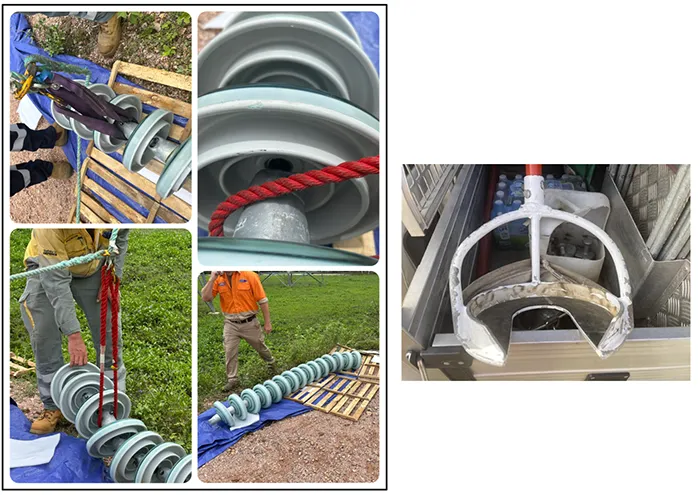
Installation instructions from suppliers often focus on de-energized handling of strings for installation. Images such as Fig. 9 highlight that ideal protection of RTV wrapped strings may not be suitable for live installation.
Powerlink therefore ensured that field trials at line worker training facilities required mock installations on training structures to practice handling, trial lifting and rigging techniques. The goal was to better understand ‘good’ and ‘not-good’ approaches. This ensured clear communication to maintenance teams that existing approaches might no longer be suitable when handing RTV-coated strings. As highlighted in Fig. 10, some methods used with live line ropes could result in damage even to bottom-coated insulators. Adjusted selection of tooling and updated approaches would therefore need to be developed.



Performance Observations Post Installation
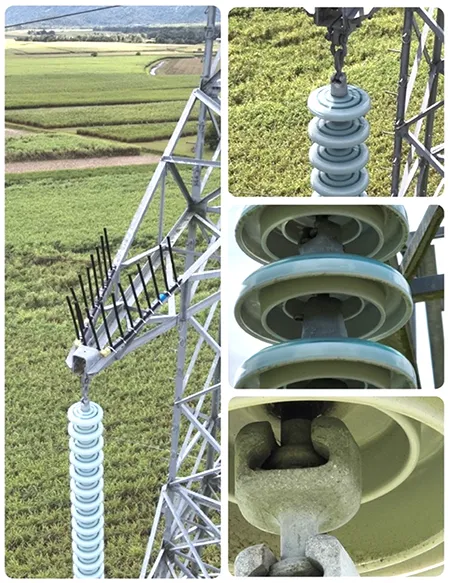
An initial amount of 30,000 RTV coated glass disc units entered service on this asset starting 2022. As indicated, 19% of the transmission line structures on the 275 kV circuit employ factory-coated glass insulators.
Pollution outage events have not re-occurred since the first wave of installation was completed in 2023. Some further optimization of bird streamer prevention methods has continued periodically in response to observations made in periodic feeder inspection patrols.
Spare RTV insulators are held in stores. Should outages occur in the future at structures without RTV coated strings installed during the ‘first wave’, these will be deployed as replacements installed at identified faulted structures. Targeted insulation washing may also be carried out in locations without RTV-coated units and where solid pollutant types are noted during periodic visual inspection.
Design Template Recommendations
Factory-coated RTV glass discs are now an accepted and approved technology for network applications. These address specific pollution design concerns and are an approved retrofit technology to improve pollution performance of a poorly performing asset that is outside its original design expectations.
Given reduced expectations in terms of the long-term performance of NCIs, factory RTV-coated insulators are now generally triggered for default use in tropical environments (ahead of NCI technology options) as well as to address site-specific very high pollution applications.
Conclusions
Deployment of factory RTV-coated glass disc insulators has offered clear advantages in mitigating pollution-related outages and enhancing overall reliability. This has been demonstrated at Powerlink Australia by their application to an operational asset that had not been performing in accordance with its original pollution design expectations.
Initial positive outcomes observed since their large-scale installation – including absence of subsequent pollution outages – highlight the effectiveness of this technology in challenging environments in a tropical context.
Adopting RTV-coated insulators as a standard for tropical and heavily polluted sites in the Powerlink network has represented a strategic and evidence-based approach to asset management. By prioritizing proven solutions tailored to specific operational risks, this network is now better positioned to achieve long-term performance and asset longevity.