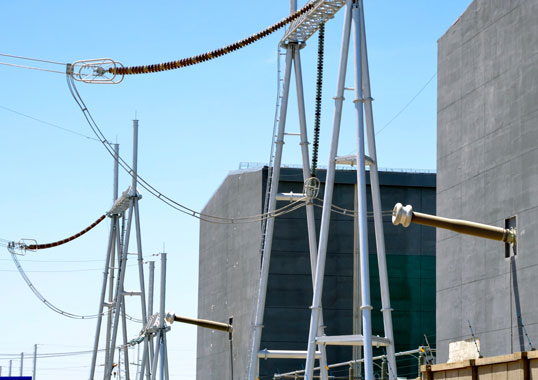

At the upcoming 2025 INMR WORLD CONGRESS, Armando Pastore, an expert with GE Vernova, will provide an overview of transformer and wall bushing solutions for areas with risk of earthquakes, focusing on design, testing, and qualification for seismic requirements.
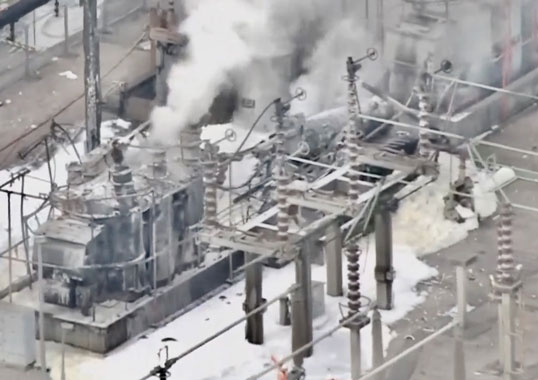
With increasing energy demand, it has become essential to secure a reliable, sustainable and affordable energy supply chain. This must be case both in normal working conditions and during events such as ice storms, typhoons, heavy snow, harsh environments and earthquakes. Earthquakes represent a particularly high risk for substation equipment.
Sudden rupture of a geologic fault causes shock waves to radiate from the fault fracture zone producing ground motion of the soil. Waves are characterized by different frequencies and magnitude. Two types of waves are generated by an earthquake, P (primary and compressive) wave for which the vibration is in the direction of propagation and S (shear and secondary) wave with vibration perpendicular to the propagation. P-wave and S-wave have normally different speed and can be recorded by seismograms. The difference in time domain offers valuable information to seismic experts.
Each soil, due to its composition of rock, sand, clay or mixture thereof is characterized by main and minor resonant frequencies. The result of an earthquake is a complex multifrequency vibratory ground motion, generating accelerations at different frequency values along both horizontal and vertical axes. The horizontal component is the most severe, being the vertical up to 50% or 80% according to IEC TS 61463:2016 and IEEE 693:2018 respectively.
Overall system response to seismic events can be much different, depending on earthquake characteristics, natural frequencies, damper, strength and ductility of the system and its components. Seismic vulnerability of equipment increases with substation voltage because of greater insulation length and corresponding increased height of equipment.
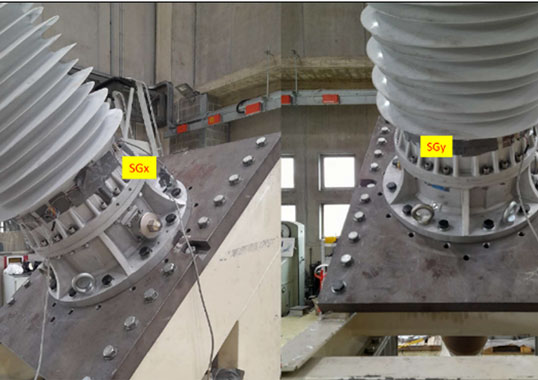
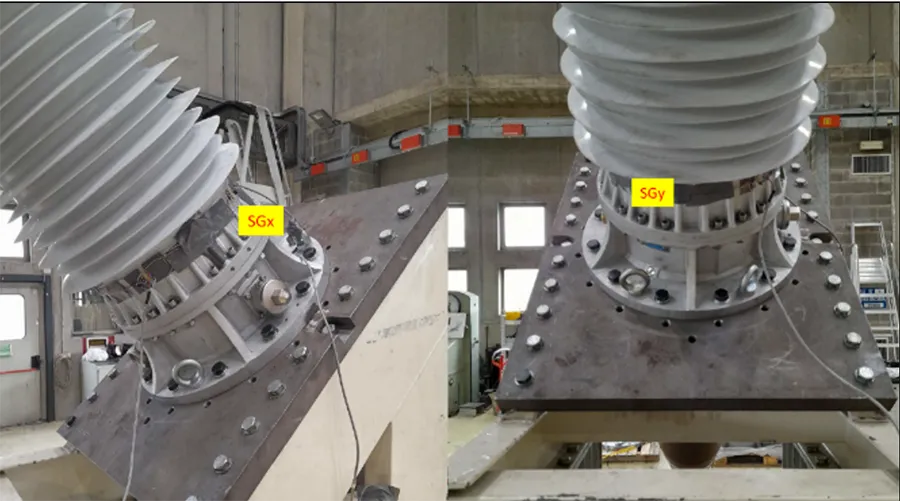
If after an earthquake the electrical equipment cannot maintain the electrical functionality at nominal operating condition, the consequences can be very critical, in terms of possible energy loss. For high voltage bushings, the inclined position can enhance the effect.
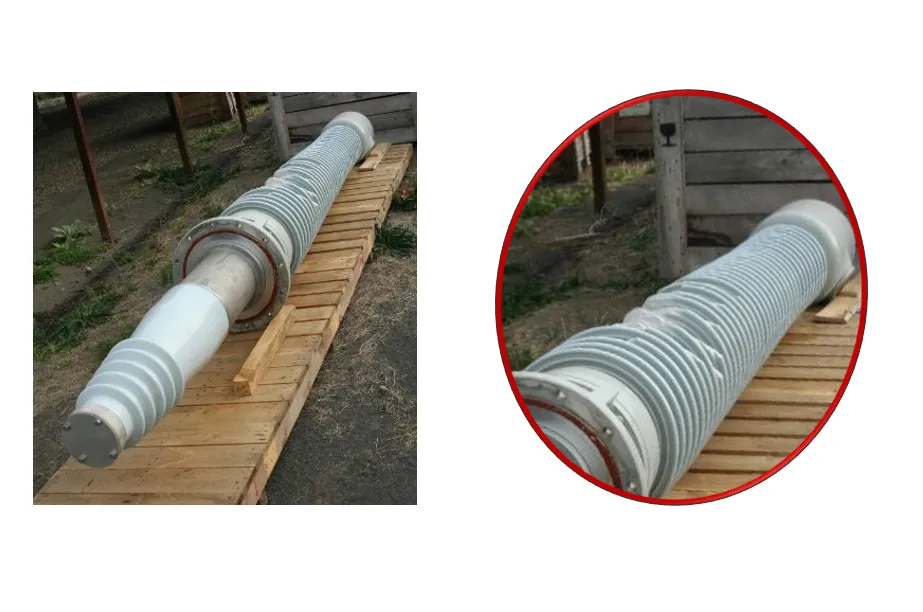
Bushings are important components and, although their cost is a small fraction that of the transformer, a bushing fault can result in energy loss because of transformer unplanned outage. Bushing design, testing and maintenance (including diagnostics) should therefore ensure that the component can work safely for the required 30-40 year service life.
Concerning bushing technology and trends, the predominant technology in the past has been oil-impregnated paper (OIP) to reach voltage classes up to 1200 kV. Now, the technology is rapidly moving toward dry bushings, with broad use of resin-impregnated-paper and resin-impregnated synthetic motivated mainly by safety and lower fire risk.