
Coming at the 2025 INMR WORLD CONGRESS
The global energy sector has been undergoing important changes aimed at reducing carbon emissions. There is the need for a more sustainable energy transition given growing demand to supply electricity to large consumer centers and future datacenters.
This has led to new challenges for utilities striving to balance development of new transmission lines with enhancement of existing infrastructure. It also makes the topic of transmission line asset management crucial. This topic involves coordination and control of all components (including insulators that are essential to maintain the integrity of transmission lines) with focus on:
• optimizing performance,
• minimizing risk,
• maximizing return on investment,
• all the while respecting the commitment to Guidelines of the global compact aimed at ESG (Environmental, Social and Governance).
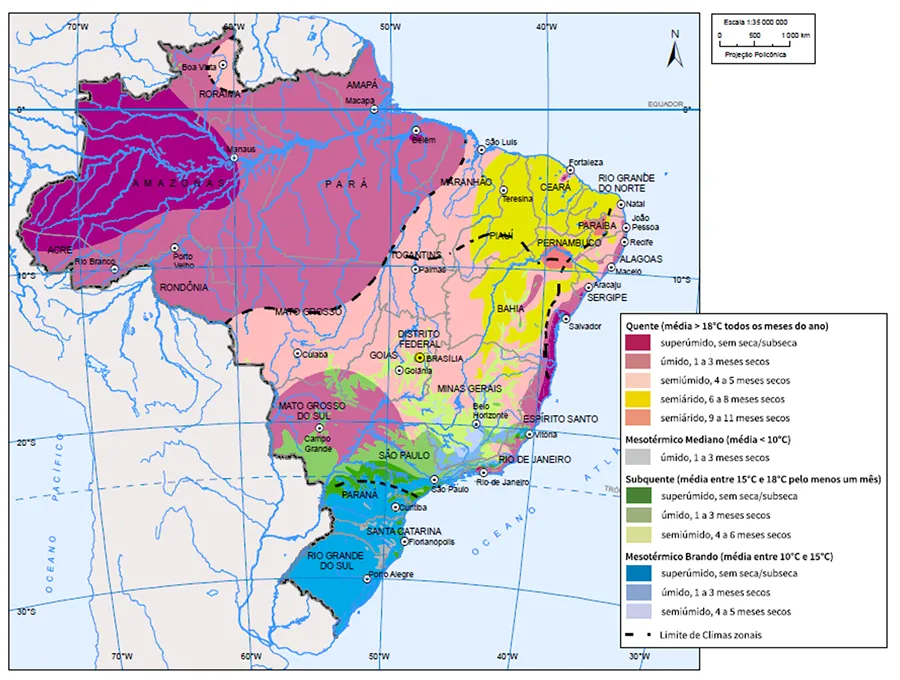
Characteristics of Tropical Climate
• High relative humidity
• Heavy and frequent rains
• High temperatures & thermal variations
• Increased risk of wet pollution and biological growth.
Insulators for Transmission Lines
Insulators are essential components of transmission lines, responsible for supporting conductors and insulating them from support structures (towers).
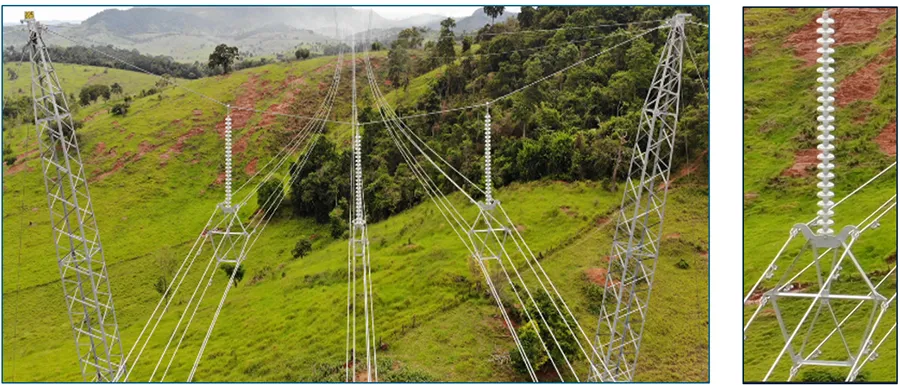
Although insulators represent only a tiny fraction of the total cost of a transmission line (on average < 3%), their role is critical to reliability. They are the key component for insulating a transmission line and contribute to the resilience of infrastructure in the face of maintenance challenges.
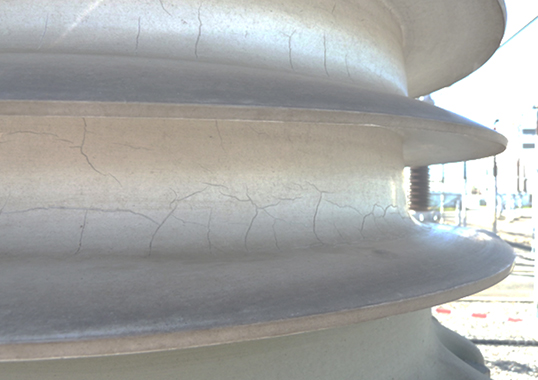
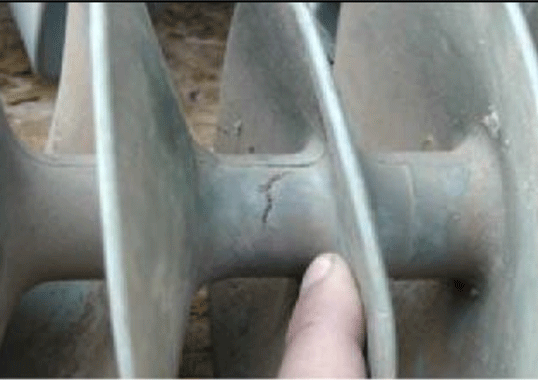
Among these challenges are issues such as degradation, ageing, technology-related failures, improper sizing for pollution levels, manufacturing defects, vandalism (especially below 230 kV), wildfire, and climate-related phenomena such as strong winds and downbursts.
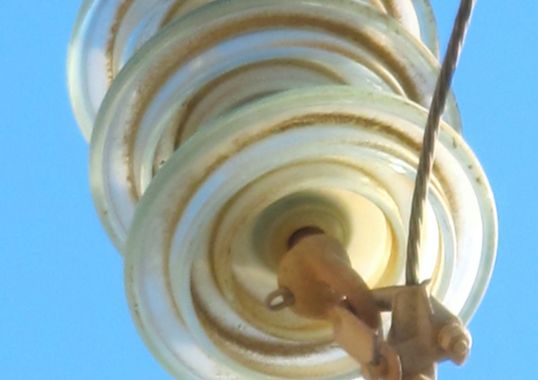
Ageing of insulators is a continuous and cumulative process that leads to deterioration of their dielectric, mechanical and surface properties. This deterioration is influenced by multiple factors, such as material composition, exposure to harsh environmental conditions, insulator design, manufacturing quality, electric field intensity, corona, electric arcs, leakage current, corrosion, etc. In this regard, the main insulator technologies, i.e. ceramic (glass or porcelain) and polymeric, each exhibit distinct characteristics, degradation mechanisms and risks in application due to their different material structures and designs.
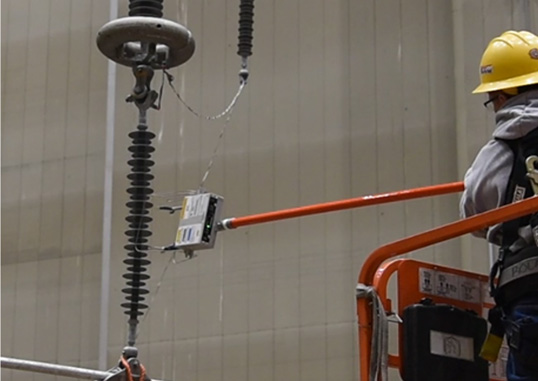
Plan to attend the upcoming 2025 INMR WORLD CONGRESS in Panama. Technical Specialist, Fabio Frutuoso, of Sediver in Brazil will present a technical approach to asset management of transmission lines. This approach focuses on evaluating the longevity of toughened glass insulators removed from high voltage and extra high voltage transmission lines after more than 40 years of operation. As is known, Brazil consists of tropical regions characterized by high humidity and elevated temperatures, which can be particularly aggressive toward materials, especially when subjected to high electrical stress. He will also include results from similar analysis of porcelain and composite insulators.