Coming at the 2025 INMR WORLD CONGRESS
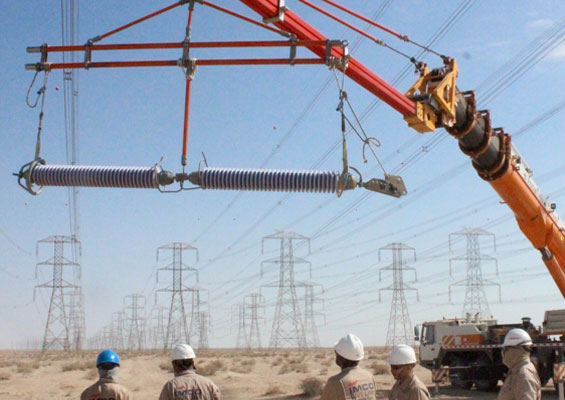
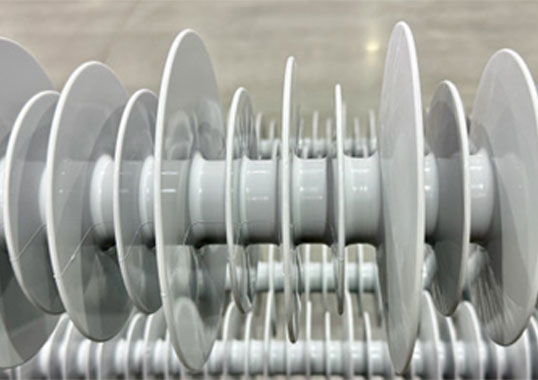
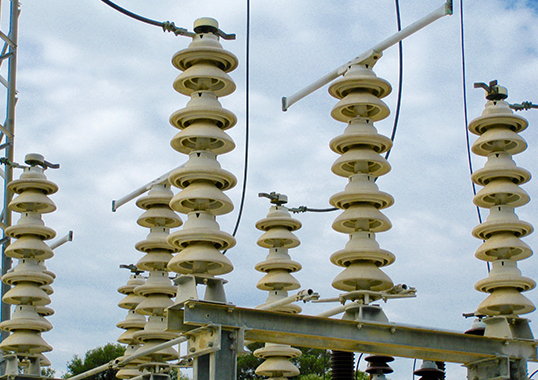
Harsh service environments, such as heavy industrial areas and deserts, can prove demanding from the point of view of selection and dimensioning insulation. After analyzing general design criteria to be adopted in these environments, possible insulation alternatives can be sub-divided into two main groups: non-HTM (hydrophobic transfer material) insulators such as toughened glass and porcelain; and HTM insulators, i.e. RTV coated ceramic or composite/polymeric type insulators.
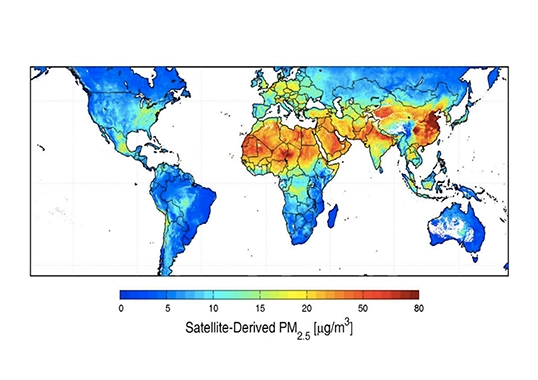
Insulator contamination maps for AC and DC play a vital role in insulator selection as well as in outdoor insulation coordination.


Specifications for selection of insulators with regards to pollution in AC are already available (i.e. IEC 60815 series 1-2-3-4) and work has been underway in IEC TC 36 towards their revision. These specifications are, in general, simplified to facilitate application.
Nevertheless, they offer sufficient information for preliminary design in all cases where pollution does not determine insulator design. A typical case, for example, is design of insulators for EHV and UHV AC systems in areas with only moderate pollution constraints: in this situation, design is usually dominated by performance requirements under switching overvoltage, which determine arcing distance.

The situation, however, is entirely different when pollution dominates design, such as for AC voltage in harsh service environments, e.g. deserts and or desert/coastal areas. This becomes even more critical under DC voltage.
Here, it is fundamental to select the proper insulator type and to develop a suitably accurate design under pollution since this can have great impact on overall system cost. In fact, overdesign (e.g. leading to extremely long and costly station insulators as well as huge towers to accommodate long insulator sets) could mean unacceptably high investment costs. On the other hand, under-design can lead to unacceptably high operating costs (e.g. with the need for costly and frequent remedial maintenance).
It is therefore essential to limit any possible inaccuracies in design by following a detailed approach based on an accurately assessing site pollution severity as well as insulator strength characteristics and then combining this information with statistical evaluation of insulator performance.
The need of proper insulation design is especially critical for HTM insulators (i.e. coated ceramic and composite types). While less than optimal design can lead to flashover in the case of ceramic insulators, it can quickly result in permanent electrical and/or mechanical degradation of HTM insulators.

Plan to participate in the 2025 INMR WORLD CONGRESS in Panama City to attend a technical presentation on the topic of AC/DC Insulator Contamination maps given by Alberto Pigini. Dr. Pigini has been regarded as one of the foremost experts in HV engineering for over 40 years and has also been a long-time contributor at major industry events such as INMR WORLD CONGRESSES as well as CIGRE General Sessions.

Dr. Pigini will also act as Chair of a focused Session: Application of RTV Silicone Coatings to HV Insulators: Latest Experience, Standards & Guidelines for Assessing End-of-Life.