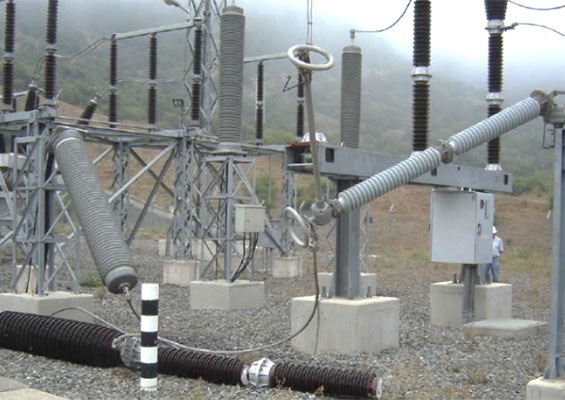
The Chilean transmission system’s response to a major earthquake in Feb. 2010 exposed serious vulnerabilities, most notably failure of conventional equipment, even that located far from the epicenter. These failures underscored the need to re-evaluate seismic criteria then in effect.
Experts conducted this reassessment in two phases: the first focused on investigating the nature of damage as well as underlying causes; the second aimed to update seismic requirements better tailored to the country’s electrical infrastructure. This process eventually led to publication of Chile’s legally binding Seismic Requirements in Jan. 2025.
This edited contribution to INMR by Marcela Aravena at Ingtegral Engineering Services (who also served as Seismic Advisor the National Energy Commission) outlines Chile’s development of a rigorous seismic standard for substations dominated by high-magnitude subduction earthquakes. Integrating equipment, structural, and geotechnical requirements while also accounting for seismic interaction between these is required to ensure post-event operability and infrastructure resilience.


Background
Chile is among the world’s most seismically active countries and has related standards for residential buildings and industrial facilities. However, at the time of the Feb 2010 quake, no specific seismic standard existed for high voltage facilities. Rather, official seismic requirements for Chile’s electrical facilities were outlined in the Technical Standard for Safety and Quality of Service and its annexes, issued by the National Energy Commission. As of 2009, this required that substation equipment meet seismic criteria defined either in the Chilean standard (ETG 1.020) or in IEEE 693-1997. It did not include seismic requirements for support structures or foundations of that equipment.
According to interpretation of IEEE 693 by domestic electrical engineers, specifying seismic requirements only for electrical equipment was deemed sufficient to ensure a facility’s operability post-quake. Yet the 8.8 magnitude Feb. 2010 tremor saw equipment failures and significant delays restoring power near the epicenter. There were also unexpected failures of ‘conventional’ equipment located far from the epicenter—more than expected even for such a seismic event.
State-of-the-Art Design of Electrical Substations as of 2010
1. Official Requirements for Electrical Facilities Before Feb 2010
Electrical equipment had to meet seismic criteria defined in either the Chilean standard ETG 1.020-1998 or IEEE 693-1997, but no seismic requirements were specified for support structures or foundations of that equipment.
2. Unofficial Seismic Requirements for Electrical Facilities Before Feb 20100
Chilean structural engineers designed equipment support structures and equipment foundations with seismic requirements based on ETG-1.015 (ENDESA, 1987) – a document developed following the 7.8 magnitude 1985 earthquake and grounded in that event’s seismic experience.
However, by 2000, new Chilean engineering firms participating in substation projects were no longer familiar with ETG 1.015. Also, starting about 2005, the transmission system saw increasing involvement by international companies, most of whom brought with them their own engineering standards — typically from non-seismic regions or areas with far lower seismic activity.
Seismic Situation for Electrical Facilities in 2010
By 2010, substations in Chile were characterized by:
• Equipment built to comply with either IEEE 693 (1997 or 2005) or ETG 1.020 — the latter being less rigorous and outdated;
• Equipment support structures that either followed known Chilean seismic guidelines (usually rigid structures) or failed to meet these, as in the case of flexible structures;
• Structures and foundations designed based primarily on the Chilean Static Method, even when support structure was no rigid;
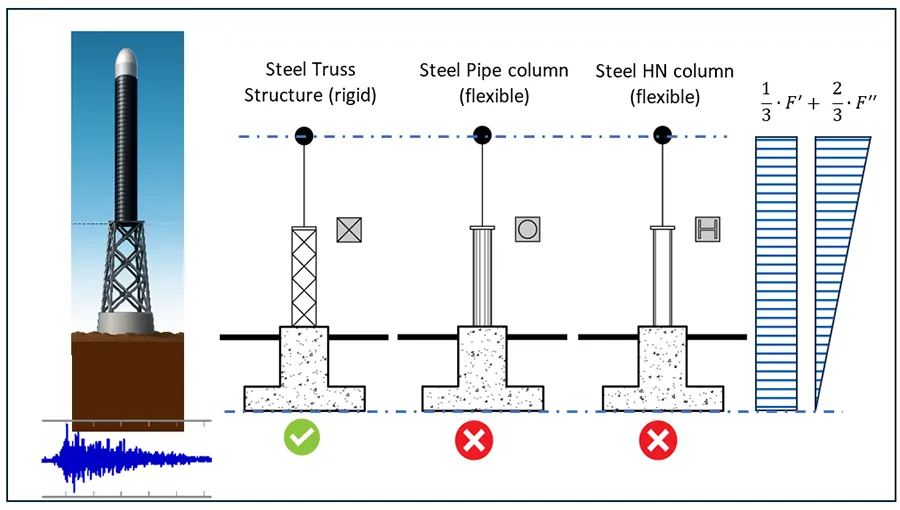
• Equipment foundations that either followed unofficial Chilean seismic practices or did not meet seismic expectations;
• Mostly traditional foundation types as shown in Fig. 1 (i.e. slab with pedestal).

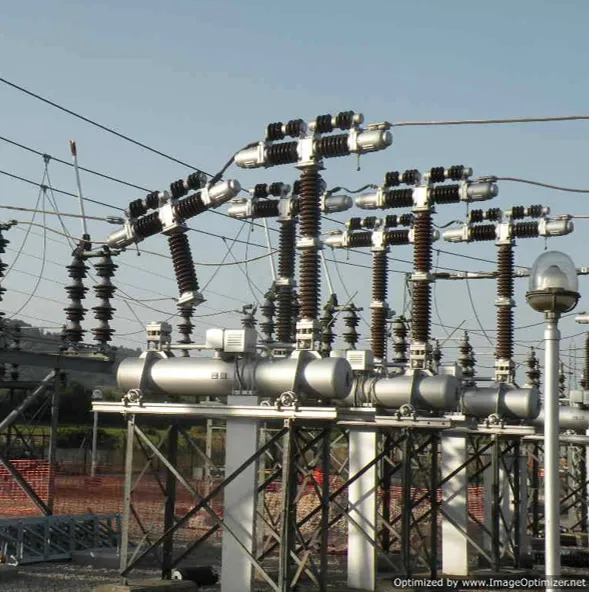
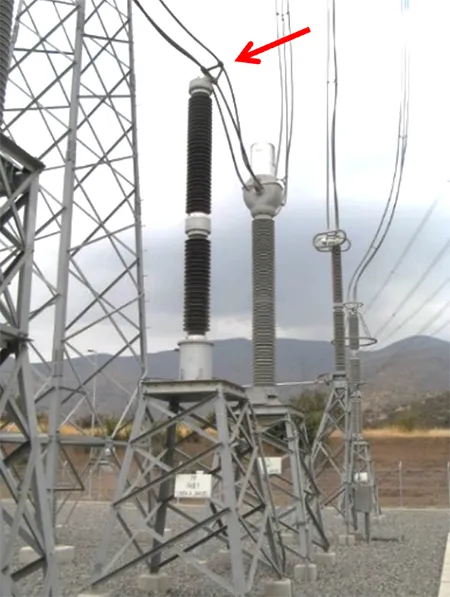
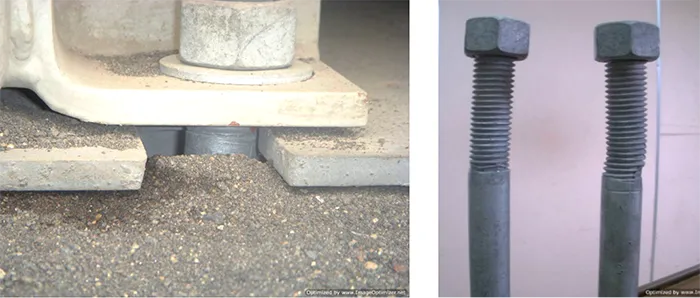
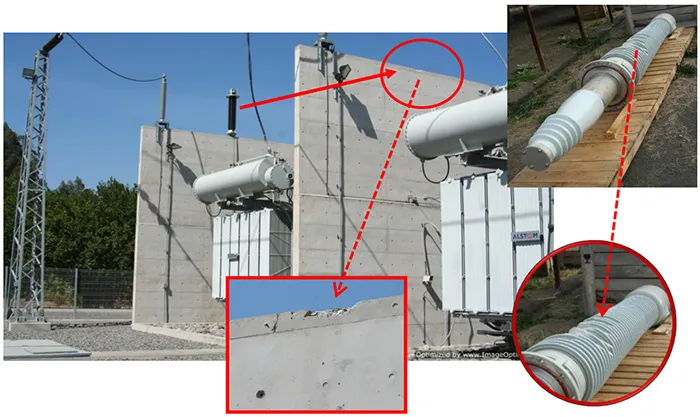
CIGRE Chile formed a Special Study Committee to assess how transmission facilities performed during the Feb. 2010 event. Failures observed could be classified into the following groups:
i.) Breakage of equipment mounted directly on its own support structures;
ii.) Breakage of equipment due to rigid electrical connection;
iii.) No damage to equipment but failure in electrical connection between equipment and substation;
iv.) Equipment materials expected to behave in a ductile manner but exhibiting brittle failure instead;
v.) Failure of transformer anchoring systems to their foundations due to design flaws, specifically the absence of seismic stops to absorb shear forces;
vi.) Damage and collapse of equipment installed on the top of firewalls;
vii.) Collateral damage to nearby equipment caused by the ‘projectile effect’ of components mounted on failed firewalls.
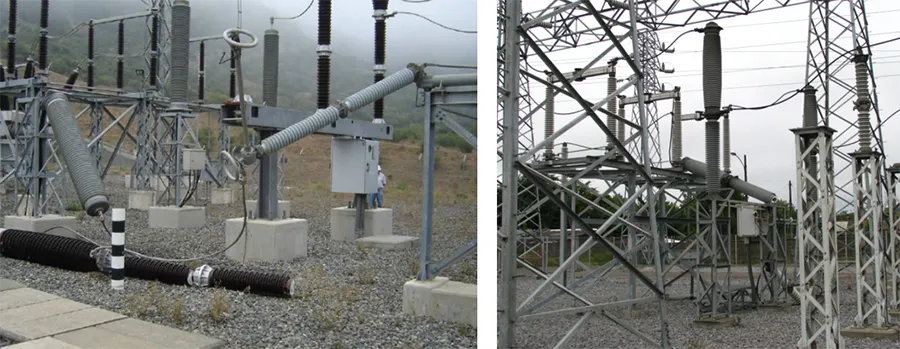
The publication by CIGRE Chile in 2012 offered valuable lessons and recommendations to assist future project development. The Committee highlighted that:
• Equipment behavior is influenced by the supporting structure and/or foundation, emphasizing the role of seismic interaction;
• Numerous equipment failures are caused by inadequate support structure;
• The ETG 1.020 spectrum may not be inherently insufficient.
• There is a clear need for a seismic code that addresses entire electrical facilities, not just the equipment itself.

New Chilean Seismic Standard
In subduction quakes, such as those typically occurring in Chile, the energy accumulated before rupture can be extremely high, making them far more powerful. Subduction events are particularly notable for high magnitude and long duration. Significance of different types of quakes is acknowledged in IEEE 693-2018, specifically Clause 6.4.5:
“…application of spectral shapes presented in Fig. A.1 and A.2 may result in qualified equipment that have lower margins against failure when subjected to subduction zone earthquakes compared to crustal earthquakes. The possibility of subduction earthquakes needs to be evaluated when determining seismic requirements.”
Based on the above, Chilean seismic requirements include:
• For electrical equipment, these are defined by seismic behavior group. This type of classification enables the requirements to be applied to any equipment mentioned in the document, as well as to any other equipment with similar seismic behavior;
• Seismic load for electrical equipment plus other simultaneous loads, such as short circuits;
• Some differences in Shake Table requirements versus IEEE 693-2018, i.e.:
◦ Input motion must have a duration of at least 45s of strong motion rather than 20s.
◦ Duration of strong motion is the time interval between 10% and 90% of the Arias Intensity.
Spectrum & Soil Classification at Site
The importance of soil classification lies in understanding its bearing capacity, deformation behavior, natural period or frequency of vibration, and potential for additional seismic amplification, among other factors. From a seismic perspective, soils are classified in descending order based on stiffness. Seismic parameters used to categorize soil types are defined in relevant national or international seismic standards.
Although specific parameters can differ between standards, the seismic soil classification and descriptions used in Chile are consistent with those established in ASCE 7-16.


Analysis of the ETG 1.020 spectra revealed that these are representative of seismic soils classified as Class A to C. This aligns with system performance during the 1985 earthquake (i.e. the base event used to develop ETG 1.020), when most equipment was made of ceramic (porcelain) materials. In the 2010 earthquake, although most equipment was still made from these materials, no damage was reported at substations relating to soil behavior. By contrast, damage was observed on transmission lines and on other types of infrastructure.
These days, more equipment is being made using polymeric housing materials, which exhibit more flexible behavior compared to ceramic materials. In addition, wind farm developments in the south of Chile are situated primarily on softer Class D soils. Because of these factors, it became necessary to update the Chilean seismic spectrum to incorporate polymeric-housed equipment on site Class D soils within the new requirements.
Because of these factors, it became necessary to update the Chilean seismic spectrum to incorporate polymeric equipment on site Class D soils within the new seismic requirements.
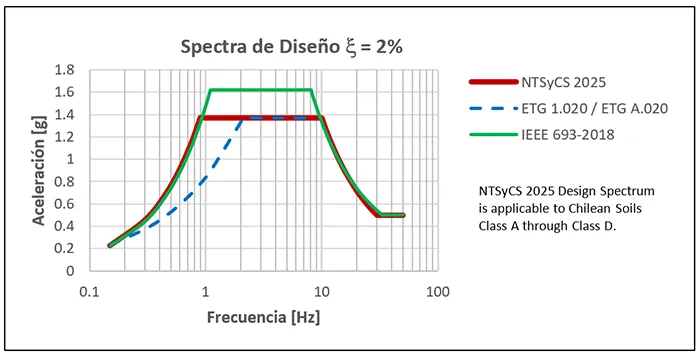
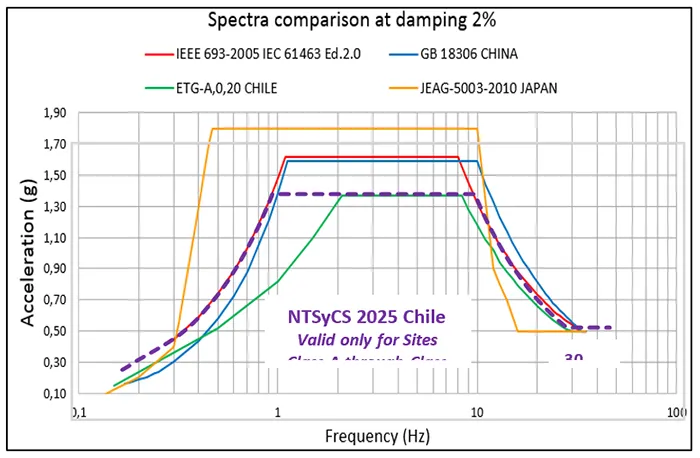
For sites not classifiable within Classes A through D, a site-specific seismic study has to be performed to establish a Design Response Spectrum. Fig. 7 shows the new design spectrum compared to that from ETG 1.020 and IEEE 693-2018. Fig. 8 shows this new spectrum alongside that analyzed in “Development of UHV Bushings for Extremely Severe Seismic Conditions, published by INMR.
Although comparing spectra provides useful information and is usually included in technical documents, it is insufficient for comparing seismic standards. Rather, it is necessary to consider that each spectrum has its own definitions and requirements that could vary according to different standards, such as soil class validity, support structure requirements, and other loads in addition to seismic loads, etc.
Seismic Interaction Between Soil Classification & GIS Equipment Behavior
GIS equipment is particularly sensitive to relative displacements between components. Therefore, its seismic behavior is closely tied to shear waves (S-waves), which are surface waves that cause vertical ground movement while propagating horizontally. The amplitude of S-waves (i.e. vertical motion) tends to be lower on rigid soils but increases with more flexible soil conditions. Given that Chilean earthquakes are typically subduction-type (i.e. long duration), manufacturers must consider the amplitude of S-waves when designing GIS equipment.
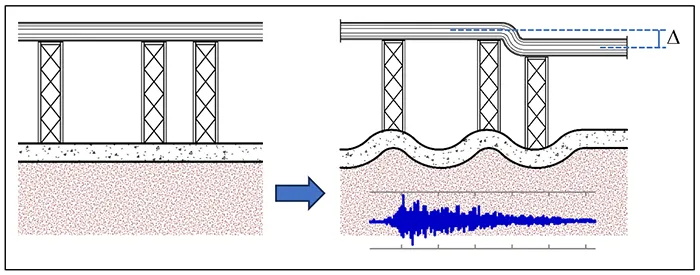
While this specific requirement for GIS has been officially included since 2025, it was mandatory since 2020 for all high voltage facilities in Chile to include a geotechnical study at the project site. This study had to provide all parameters necessary to classify soil in accordance with national seismic regulations.
Seismic Behavior of Structure and/or Foundation in Relation to Equipment Being Supported
1) What does it mean that structure or foundation is inadequate?
This means that while the structure and foundation may be able to withstand seismic demands, their behavior under seismic loading causes amplification relative to the accelerations experienced by the equipment they support (the resonance effect). Referring to the spectra in Fig. 7, and a peak ground acceleration (Ao) of 0.5g:
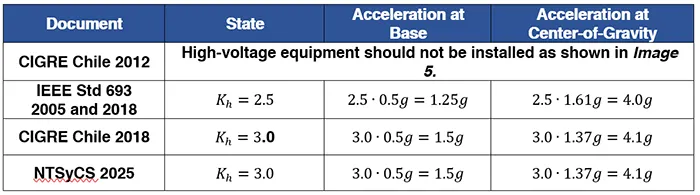
• If the equipment is mounted on a properly designed support structure and foundation, the acceleration at its base will be Ao = 0.5g, and the maximum acceleration at its center-of-gravity will reach 1.37g (or 1.61g depending on applied spectra).
• However, if the same equipment is installed on an inadequate support structure or foundation, both the base and center-of-gravity, accelerations could significantly exceed these expected values.
2) How much higher can it be?
This will depend on how flexible the structure and foundation system are in comparison to the equipment itself. Some recommendations and standards specify an Amplification Factor “Kh” for the horizontal seismic acceleration Ao = 0.5g. This means that the horizontal acceleration for equipment will be:
Kh ∙ A0 = Kh ∙ 0.5g at the base
Regarding this, the Chilean documents, and the IEEE Standard state the following:
3) 3) Can a support structure and/or foundation be adequate for one equipment but inadequate for another?
Yes. Structure and/or foundation must be appropriate for the specific equipment they support. If a piece of equipment is replaced with another that differs in its seismic characteristics, it is essential to verify that the existing structure and/or foundation are suitable for the new equipment—even if it performs the same electrical function or operates at the same voltage level.
A piece of equipment is considered seismically different when at least one of the following properties varies: total height, weight, location of the center of gravity, natural frequency of vibration, sensitivity to displacement, etc.

Amplification Factors for Equipment
Amplification factors represent the increase in seismic acceleration experienced by equipment due to the supporting structure’s dynamic behavior, particularly when the structure’s role is not exclusively to support the equipment. Based on analyses carried out by CIGRE Chile and accepted by the Committee, the following amplification factors have been established:
Kh = 3 for horizontal seismic acceleration
Kv = 1 or 1.4 for vertical seismic acceleration
In Chile, this situation occurs due to a lack of space at substations, (see Fig. 10) especially when updates are needed (see gantry photo) and due to reasons of safety, as shown for the transmission line in Fig. 11.
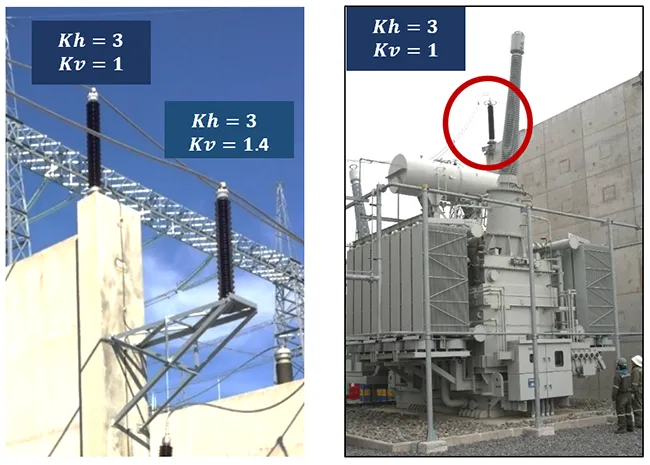
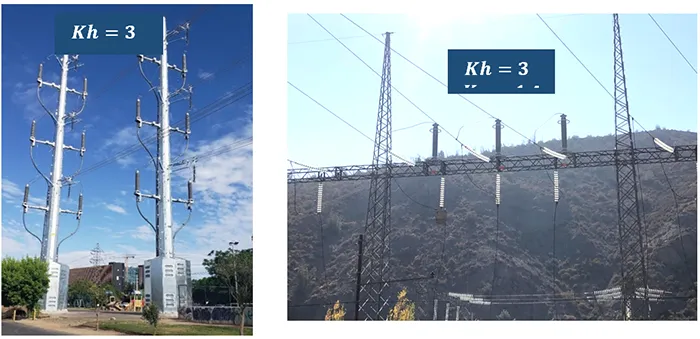
These values are considered realistic (i.e. non-conservative). This means that the structural designer must incorporate rigid elements in the local area where equipment is installed, ensuring that the seismic acceleration at the base of the equipment does not exceed Kh ∙ Ao for horizontal acceleration and Kv ∙ Av for vertical acceleration.

Conclusions
Why a Chile-specific standard?
Subduction earthquakes, such as those that occur in Chile, release a great amount of energy and last far longer than other types. This means, among other things, that the duration of strong motion is longer than what is considered in IEEE 693-2018. As a result, it is necessary to consider longer duration for strong ground motion in Shaking Table Tests, as well as other loads acting simultaneously with seismic loads.
Actual seismic behavior of equipment is influenced by the supporting structure and/or foundation, as well as soil class at the installation site. This emphasizes the role of seismic interaction in defining seismic requirements for electrical facilities, ensuring post-event operability, and promoting infrastructure resilience.
Similarly, the seismic response of the ground at the site plays a critical role in the case of equipment sensitive to relative displacements between components, e.g. GIS. Since Chilean earthquakes are typically subduction-type and characterized by long duration, amplitude of shear waves (S-waves)—which cause vertical ground motion while propagating horizontally—must be explicitly considered in design of such equipment.
In addition, due to safety concerns and spatial limitations, some facilities require equipment be mounted on structures that were not specifically designed to support them (see Figs. 10 & 11). This makes it essential to define seismic requirements not only for the equipment but also for these support structures.
Does the Chile-specific standard mean the IEEE Std 693 is no longer valid?
IEEE Std 693 is still valid, however not sufficient: additional seismic requirements are necessary for equipment as well as support structures and foundations.
What do the new Chilean seismic requirements do?
• Define consistent seismic requirements for equipment, supporting structures, and foundations into a single document, ensuring that changes to one component require updates to the others;
• Define seismic requirements for electrical equipment by seismic behavior groups. This type of seismic classification enables requirements to be applied to any equipment mentioned in the document, as well as to any other equipment with similar seismic behavior;
• Include soil seismic behavior as a variable, both in definition of Design Spectrum and in the procedures for sites with soil classified as unstable and/or prone to deformation;
• Address soil-structure interaction when designing displacement-sensitive equipment such as GIS;
• Introduce a mandatory role of “Seismic Reviewer” for each seismic design—not only for equipment, but also for structures and civil works (e.g., “Equipment Seismic Reviewer” and “Structure Seismic Reviewer”);
• Define clear responsibilities for all stakeholders involved in engineering, supply, construction, and assembly phases.



REFERENCES
[1]. January 2025 – Chilean National Energy Commission: Public document “Seismic Requirements for High Voltage Electrical Facilities”, official document included as an Annex in the Safety and Quality of Service Standard.
[2]. January 2025 – Chilean National Energy Commission: Updated version of the 2020 public document “Minimum Design Requirements for Transmission Facilities”, official document included as an Annex in the Safety and Quality of Service Standard.
[3]. 2022–2023 – Chilean National Energy Commission: Public documents from the 10 Sessions of the Advisory Committee for the drafting of the official document on Seismic Requirements.
[4]. Jun 2019 – Presentation by Marcela Aravena at Chilean Engineers Association: “Seismic Loads for High Voltage Facilities: The need for a National Seismic Standard”.
[5]. December 2018 – Presentation by Marcela Aravena and Hernán Casar at the CIGRE Chile Tutorial: “Seismic Requirements for High Voltage Electrical Facilities. Toward a National Seismic Standard.”
[6]. 2018 – CIGRE Chile Publication: “Recommended Seismic Requirements for High Voltage Facilities”, Working Group led by Hernán Casar and Marcela Aravena.
[7]. IEEE Std 693-2018 – Recommended Practice for Seismic Design of Substations.
[8]. 2013 – ETG A.020 Version 8, Transelec. Seismic Design Specifications for High Voltage Electrical Facilities.
[9]. 2012 – CIGRE Chile Publication: “Lessons and Recommendations for the Electrical Sector Derived from the February 27, 2010 Earthquake in Chile.”
[10]. June 2011 – Presentation by Marcela Aravena and Hernán Casar at the Chilean Association of Engineers: “Lessons Learned in the Chilean Electrical Transmission System. Are the Seismic Specifications Adequate?”
[11]. October 2010 – Presentation by Marcela Aravena at the CIGRE Chile Seminar: “Seismic Design of Structures and Foundations in Electrical Transmission Facilities.”
[12]. IEEE Std 693-2005 – Recommended Practice for Seismic Design of Substations.
[13]. IEEE Std 693-1997 – Recommended Practice for Seismic Design of Substations.
[14]. ETG 1.020-1997 – Ingendesa: General Technical Specifications. Seismic Design Requirements for Electrical Equipment. Condensed version.
[15]. ETG 1.015-1987 – Endesa: General Technical Specifications. Seismic Design.
[16]. “Development of UHV Bushings for Extremely Severe Seismic Conditions.” Authors: P. Cardano, G. Testin, V. Fogliani, A. Pastore, M. Sehovac. Published by INMR.