
Sweden operates one of the world’s oldest high voltage power systems. Transmission at high voltage commenced in the early 20th century, with the first 220 kV lines built in the 1930s using porcelain insulators. Since then, 130, 220, and 400 kV networks have predominantly employed porcelain and glass cap and pin strings with good service experience. Today, glass cap and pin insulators remain the standard for 130 to 400 kV.
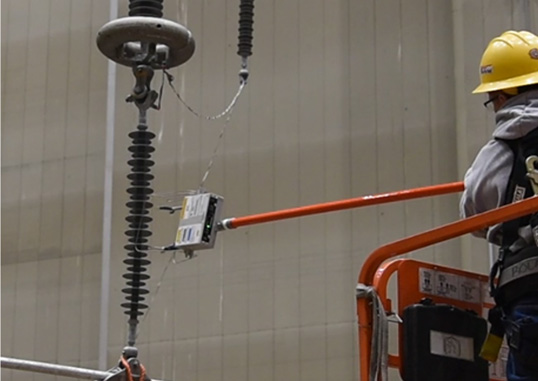
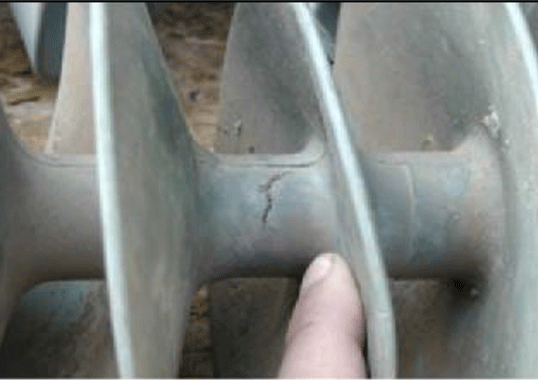
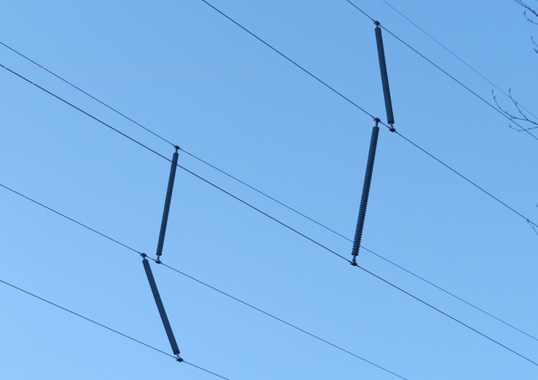
Composite line insulators have seen limited adoption on overhead lines in Sweden. Nonetheless, Svenska kraftnät, EON and Vattenfall have installed composite units on their networks for more than 20 years. This is particularly the case in substations where composite apparatus insulators are favored for safety reasons in the event of explosive failures. E.ON’s first composite long rod line installation was in 2014; Vattenfalls’ first composite insulator line was built in the mid 90s.
Swedish Environmental Context
Swedish operating conditions include wide temperature variation (−40 to +35 °C). Coastal areas along the North Sea experience some salt pollution, though ESDD levels are generally low. Overall pollution in Sweden is typically classified as very light. Creepage design commonly targets USCD ≈ 25 mm/kV (SCD 15 mm/kV).
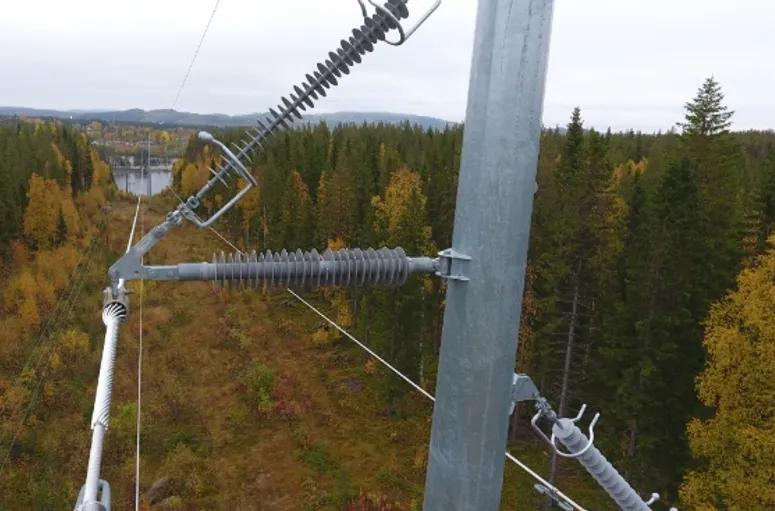
Transmission line components are specified for 80 year expected service life, while substation equipment targets 40 years.
Attend the upcoming 2025 INMR WORLD CONGRESS in Panama, where Head of Asset Development at E.ON Energidistribution, Claes Ahlrot and Vatenfall Eldistribution Asset Manager Milan Radosavljevic will review service experience with composite insulators at the major Swedish power utilities. They will explain the different failure modes observed and how this has impacted inspection and maintenance practices. They will also detail how purchasing specifications for these insulators have changed.